
 EN
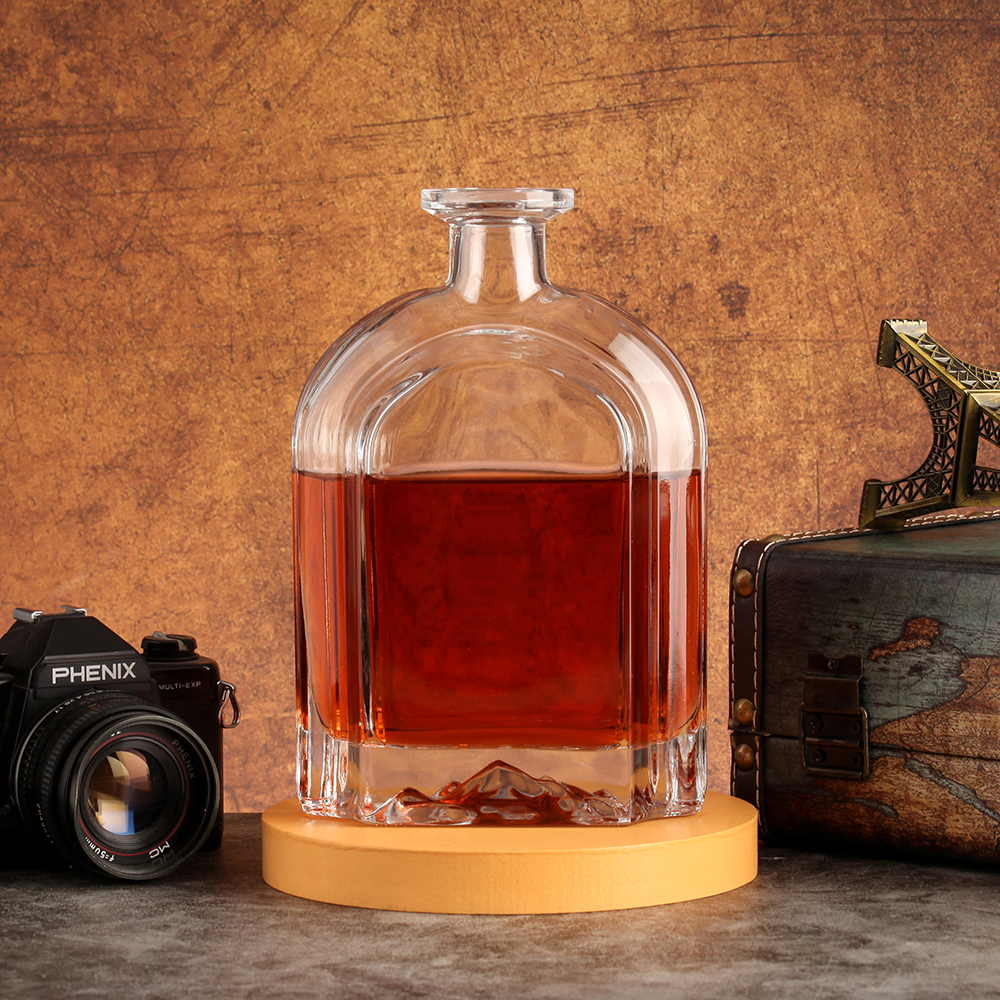
Impermeability: The Oxygen Barrier That Prevents Oxidation in Spirit Bottles
How glass blocks oxygen ingress and ethanol evaporation to preserve alcohol integrity
Glass functions as a truly impermeable barrier due to its non-porous, amorphous silica network—molecularly dense and chemically stable. Unlike PET or polyethylene, whose polymer chains create interstitial gaps, intact glass offers no micro-channels for oxygen ingress or ethanol vapor egress. Scanning electron microscopy confirms pore sizes below 0.5 nm on flawless surfaces, while even high-barrier polymers exhibit measurable microvoids from manufacturing. Laboratory oxygen transmission rate (OTR) tests consistently show glass closures measuring < 0.01 cc/m²/day, compared to monolayer PET’s typical range of 20+ cc/m²/day under identical conditions (2023 Packaging Barrier Data). This near-zero permeation is critical: trace oxygen drives aldehyde formation and degrades volatile esters, while ethanol loss through evaporation reduces ABV and blunts mouthfeel. Since the only potential exchange points lie at the finish and closure, a properly seated cork or screw cap completes the sealed system. Crucially, glass does not plasticize, swell, or degrade upon long-term contact with ethanol—ensuring barrier integrity remains unchanged over decades. By restricting both molecular ingress and egress, glass preserves the spirit’s original alcohol integrity, aromatic intensity, and structural weight far longer than any alternative.
Oxidation kinetics in aged spirits and why spirit bottle impermeability is non-negotiable
Oxidation in bottled spirits follows first-order kinetics: even minute oxygen concentrations react continuously with ethanol and phenolic compounds, generating acetaldehyde and quinones. While controlled oxygen exposure during barrel maturation enhances complexity, post-bottling oxidation serves no functional purpose—and rapidly degrades quality. Research shows that just 1 mg/L of cumulative oxygen ingress can measurably shift sensory markers within 12 months, particularly in low-fill bottles or high-ABV expressions (2022 Beverage Stability Study). For collectors holding a 10-year single malt, a semi-permeable container could allow over 50 mg/L of oxygen uptake across a decade—producing sherry-like, nutty, or stale off-notes inconsistent with the distiller’s intent. In contrast, properly sealed glass limits total uptake to < 1 mg/L, preserving the bottling-day profile. Reaction rates double with every 10°C rise above 20°C, making warm storage especially punishing for even marginally permeable packages. Closure-related ingress adds another 0.2–0.5 mg/L/year, primarily as natural cork compressibility relaxes over time (2023 Closure Study). This kinetic reality elevates glass impermeability from a convenience to a requirement: the package must act as an active kinetic barrier—not merely a passive vessel. Over extended horizons, tiny permeability differences compound irreversibly, distinguishing preserved spirits from oxidized failures.
Chemical Inertness: How Glass Spirit Bottles Maintain Uncompromised Flavor and Aroma
Glass vs. PET, aluminum, and coated plastics: leaching risks and sensory impact evidence
Glass derives its inertness from a thermodynamically stable silicon dioxide matrix—requiring no plasticizers, adhesion promoters, or internal coatings that might migrate into high-proof spirits. PET, by contrast, can release acetaldehyde and antimony under prolonged ethanol exposure, especially at elevated temperatures (2021 Food-Contact Migration Testing). Aluminum containers rely on polymer lacquers—some containing bisphenol-type monomers—that introduce pathways for off-flavor precursors. Coated plastics pose a dual threat: additive leaching and aroma scalping, where esters and terpenes are absorbed into the packaging wall. Trained sensory panels detect statistically significant flavor divergence between glass and alternative-packaged spirits within 6–12 months, even when chemical migration remains below regulatory thresholds (2022). Because high-ethanol liquids (e.g., cask-strength whisky, overproof rum) are aggressive solvents, these interactions are functionally inevitable—not theoretical. True inertness means zero extractables and zero sensory drift: only glass guarantees the ester balance, phenolic structure, and mouthfeel intended by the distiller.
10-year single malt Scotch case study: flavor stability in glass spirit bottles versus alternatives
A controlled 10-year aging trial compared identical cask-strength single malt Scotch stored in three formats: inert glass, lined aluminum, and multilayer PET. All samples were filled identically and stored in darkness at a constant 15°C to isolate packaging effects. After a decade, the glass-packaged sample retained 92% of key ester markers, with no detectable leachables above 1 ppb (2023). The aluminum-lined sample showed elevated styrene screening values, while multilayer PET registered acetaldehyde concentrations exceeding sensory thresholds. Trained evaluators rated the glass sample as “malty and citrus-led” with superior finish length and cleanliness; alternatives scored significantly lower on aromatic clarity and overall coherence. Sensory analysis confirmed strong statistical preference for the glass controls (p < 0.05). This longitudinal evidence underscores a practical truth: premium spirits often spend years on retail shelves or in private cellars before opening. Only a chemically silent package delivers decade-scale stability—avoiding the slow plasticizer migration, coating fatigue, and oxidative creep that inevitably alter the final dram.
UV-Blocking Amber Glass: Critical Light Protection for Spirit Bottle Shelf Life
Spectral analysis: why amber glass outperforms flint and cobalt for UV-A/UV-B attenuation in spirit bottles
UV radiation catalyzes photochemical degradation in spirits, cleaving delicate esters, lactones, and botanical terpenes—leading to faded color, flattened aroma, and stale, cardboard-like off-notes. Amber glass mitigates this via iron-sulfur chromophores that selectively absorb UV-A (315–400 nm) and most UV-B (280–315 nm), transmitting only limited visible light above 450 nm. Spectral transmission data confirms amber glass blocks 90–99% of harmful UV energy below 450 nm, whereas flint glass transmits up to 80% of UV-A, and cobalt glass still passes measurable blue light near 400–450 nm. That spectral gap has direct sensory consequences: even brief exposure to ambient or backlit display lighting accelerates degradation. By suppressing photon-driven oxidation, amber glass maintains ester freshness, aromatic fidelity, and visual consistency—making it the evidence-based standard for UV-sensitive categories like gin, vermouth, and barrel-aged brandy. Its protective role becomes indispensable in real-world environments: illuminated bars, sunlit retail cabinets, or transparent home displays.
Optimal Storage Conditions: Maximizing Longevity of Spirits in Glass Spirit Bottles
Proper storage ensures both the liquid and its glass container remain uncompromised over time. Always store spirit bottles upright—this keeps high-proof alcohol away from the cork or closure, preventing dry-out, cracking, or seal failure. A compromised seal invites oxygen ingress and accelerates oxidation. Maintain a steady temperature between 15°C and 20°C (59°F–68°F); avoid proximity to ovens, radiators, or sunny windows, as heat doubles oxidation rates per 10°C rise. Keep bottles in complete darkness: UV and intense visible light trigger photochemical reactions that degrade esters and phenols. Relative humidity of 50–70% supports cork integrity without warping labels or encouraging mold. Use a dedicated cabinet or shelf to minimize thermal cycling.
- Store every spirit bottle upright
- Maintain steady temperature (15–20°C)
- Hold relative humidity at 50–70%
- Block all direct sunlight and strong artificial light
- Inspect closures and liquid clarity every 3–6 months
These practices slow oxidative and photochemical degradation, preserving aromatic complexity, mouthfeel, and structural balance. Glass performs at its best—not in isolation—but as part of a holistic storage protocol grounded in chemistry and decades of empirical observation.
FAQ
Why is glass a preferred material for storing spirits?
Glass is non-porous and chemically stable, offering superior protection against oxidation and evaporation. It does not leach chemicals or alter the flavor and aroma of spirits, making it an ideal material for long-term storage.
How does glass prevent oxidation in spirit bottles?
Glass has a highly dense, amorphous silica network that does not allow oxygen or other molecules to pass through, which helps preserve the alcohol's integrity and prevents oxidation.
Why is UV blocking important for spirit bottles?
UV radiation can degrade the compounds in spirits, leading to faded color and poor taste over time. Amber glass is especially effective at blocking UV-A and UV-B rays, protecting the contents from photochemical degradation.
What are the best storage conditions for spirits in glass bottles?
Store spirit bottles upright at a consistent temperature between 15–20°C (59°F–68°F), with a relative humidity of 50–70%. Protect them from direct sunlight and inspect closures every 3–6 months to ensure integrity.
How does glass compare to other packaging materials like PET or aluminum for spirits?
Unlike PET or aluminum, glass does not allow chemical leaching or molecular movement. This keeps the flavor, aroma, and alcohol concentration of the spirit intact over time, making glass the superior option for high-quality spirits.
Table of Contents
- Impermeability: The Oxygen Barrier That Prevents Oxidation in Spirit Bottles
- Chemical Inertness: How Glass Spirit Bottles Maintain Uncompromised Flavor and Aroma
- UV-Blocking Amber Glass: Critical Light Protection for Spirit Bottle Shelf Life
- Optimal Storage Conditions: Maximizing Longevity of Spirits in Glass Spirit Bottles
-
FAQ
- Why is glass a preferred material for storing spirits?
- How does glass prevent oxidation in spirit bottles?
- Why is UV blocking important for spirit bottles?
- What are the best storage conditions for spirits in glass bottles?
- How does glass compare to other packaging materials like PET or aluminum for spirits?