
 EN
Why Spray Coating Is the Preferred Finish for Glass Wine Bottles
Rising demand for vibrant, consistent color on premium glass wine bottles (e.g., baijiu, whiskey, rosé)
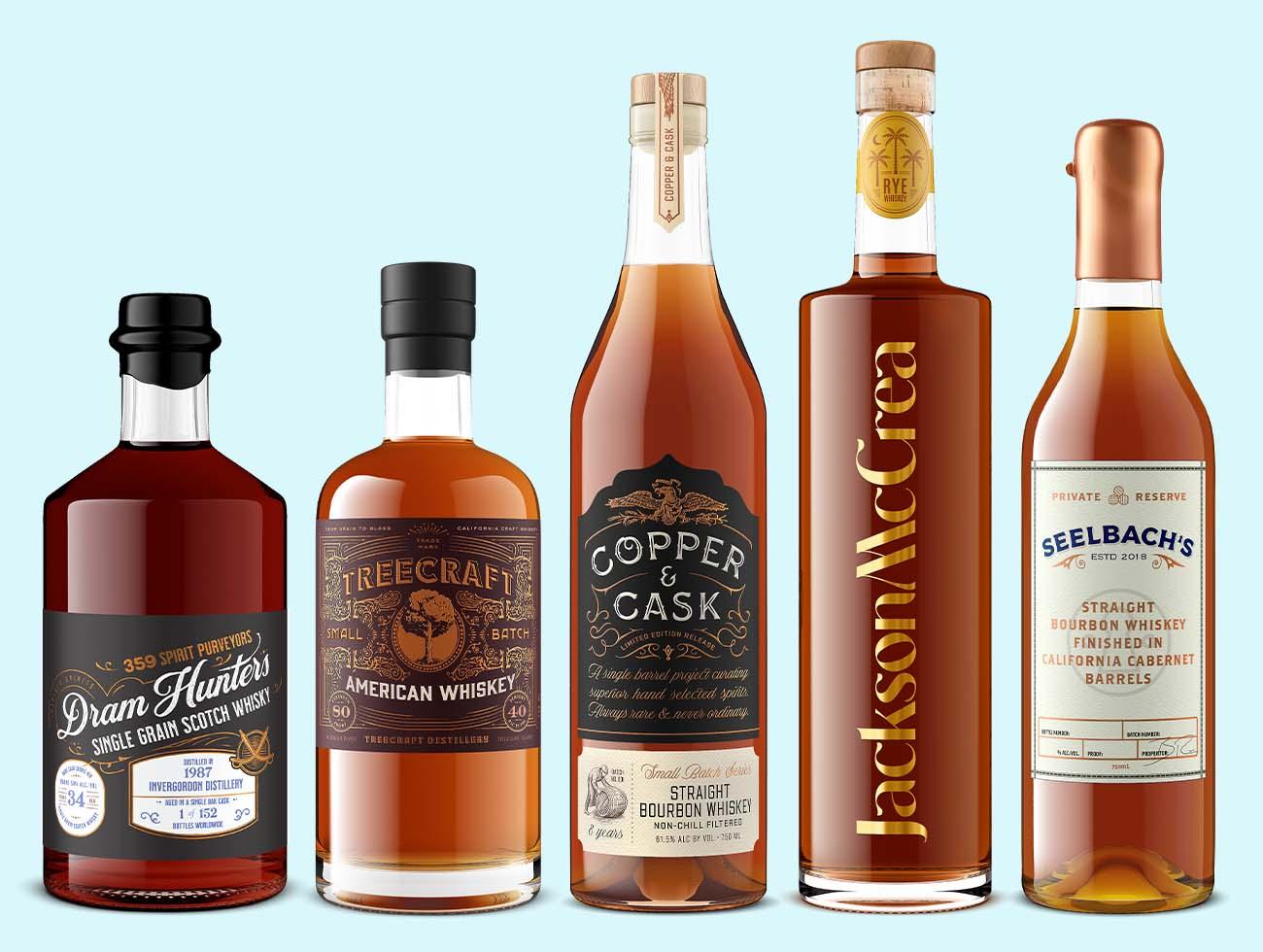
Premium spirits and wine brands increasingly rely on spray coating to deliver a distinctive, brand-consistent finish on glass wine bottles—transforming clear containers into bold visual assets. While clear glass and paper labels often recede on crowded retail shelves, a precisely applied matte black, translucent green, glossy red, ceramic white, or smoky amber coating creates immediate impact. This is especially critical for baijiu, whiskey, rosé, and limited-edition releases, where vibrant, batch-to-batch color stability reinforces premium positioning. Unlike custom-colored glass—requiring long-lead molds and inflexible design cycles—spray coating enables rapid iteration: brands can test seasonal variants, gift-pack finishes, or regional launches on existing bottle shapes before committing to scale. As a result, color evolves from an aesthetic afterthought into a strategic, low-risk packaging lever.
How UV-cured acrylic spray systems chemically bond pigment to glass—ensuring alcohol resistance and adhesion
UV-cured acrylic spray systems achieve durability by applying a thin, controlled layer of acrylic resin and pigment that chemically bonds to the glass surface. Photoinitiators in the formulation react under ultraviolet light, triggering near-instantaneous cross-linking into a dense, solvent-free polymer film. This covalent integration—not just physical coverage—anchors the pigment directly to the substrate. To ensure reliable adhesion, manufacturers clean the glass thoroughly, remove surface contaminants, and apply a compatible primer prior to spraying. After UV curing, the resulting film resists ethanol exposure, high humidity, and repeated handling without peeling, chipping, or fading. That chemical bond underpins both alcohol resistance and long-term color integrity—making UV-cured acrylic systems the industry standard for premium glass wine bottles and high-proof spirits packaging.
Durability Testing: Validating Performance of Spray-Coated Glass Wine Bottles
Lab validation confirms that a spray-colored finish can survive ethanol, scratching, and handling before it ever reaches the filling line.
ASTM D3359 cross-hatch adhesion and ISO 1518-1 scratch resistance under 72h ethanol immersion
For spray-coated glass wine bottles, performance hinges on two interdependent properties: adhesion strength and mechanical resilience. ASTM D3359 cross-hatch adhesion testing evaluates how firmly the UV-cured acrylic layer bonds to glass. Technicians cut a lattice pattern through the coating, apply standardized tape, and pull it away. A rating of 5B means no coating removal; 4B indicates less than 5% edge loss. Crucially, panels must retain at least a 4B rating after 72 hours of full ethanol immersion—a requirement that simulates real-world contact during filling and storage. ISO 1518-1 scratch resistance testing then applies a calibrated stylus load to assess surface integrity: the coating must not crack, flake, or expose bare glass at the specified force. Together, these tests replicate the stresses of case packing, palletizing, bar service, and consumer handling. Because ethanol can gradually degrade weakly adhered coatings, ethanol immersion precedes cross-hatch testing—serving as a critical early-warning screen. Manufacturers typically sample 1 in every 500 bottles per production lot to balance rigor with efficiency while safeguarding batch reliability.
Real-world validation: 98.7% color consistency across 500K+ glass wine bottles in high-volume production
In a 2024 production audit covering more than 500,000 spray-colored glass wine bottles, automated inline spectrophotometers recorded 98.7% color consistency—meaning only 1.3% of units fell outside the agreed tolerance and were rejected before filling. This level of repeatability stems from disciplined process control: daily instrument calibration, tightly regulated spray booth humidity (±2% RH), and routine viscosity checks on the UV-cured acrylic material. Batch records trace each lot from coating application through UV cure energy delivery, enabling rapid response to any deviation. For premium spirits brands, this consistency translates directly to shelf confidence—fewer visual mismatches, fewer distributor returns, and seamless private-label execution across multiple runs. When half a million bottles deliver nearly identical shade, the glass wine bottle becomes a reliable extension of brand identity—not a variable.
Brand Impact: Color Consistency as a Trust Signal on the Shelf
Consumer perception: 63% link uniform bottle color to brand authenticity and premium quality (IWSR 2023)
Uniform spray color on a glass wine bottle functions as a powerful, non-verbal trust signal. According to IWSR’s 2023 global consumer study, 63% of buyers associate consistent bottle color with brand authenticity and premium quality. Under retail lighting, a perfectly matched case signals precision, control, and attention to detail—reinforcing perceptions of fill accuracy, closure integrity, and batch reliability. This effect is particularly pronounced for rosé, baijiu, and whiskey, where rich or saturated tints suggest intentional craftsmanship rather than accidental variation. In contrast, even subtle hue shifts across the same SKU can trigger subconscious doubts about product age, sourcing, or quality control. Spray coating eliminates that risk by locking in a single, repeatable color standard—supporting higher price points and strengthening first-impression equity.
Spectrophotometric process control (ΔE < 1.2) for real-time color accuracy in glass wine bottle production
Spectrophotometric process control makes brand-level color consistency measurable, actionable, and repeatable. Inline spectrophotometers read each bottle’s L*a*b* coordinates in real time and compare them against a master reference standard. A Delta E (ΔE) threshold below 1.2 ensures variation remains imperceptible to the human eye—well within the limits of trained observers and far tighter than typical commercial tolerances. When readings drift beyond ΔE 1.2, the system alerts operators to adjust coating thickness, pigment concentration, or UV lamp output before defective units advance down the line. By rejecting only out-of-spec pieces—not entire batches—producers minimize waste, avoid mismatched inventory, and preserve the uniform shelf block essential for premium presentation. The logged data also supports full traceability and color certification for clients who require auditable proof of visual fidelity. Over time, sustained ΔE < 1.2 reduces rework, improves yield, and delivers on the brand’s unspoken promise: every bottle looks exactly as intended.
FAQ
Why is spray coating preferred over custom-colored glass for wine bottles?
Spray coating is preferred because it allows rapid iteration and cost-effective updates without the need for long-lead molds and inflexible design cycles. It enables brands to test seasonal variants and regional launches efficiently.
How does UV-cured acrylic spray ensure durability?
UV-cured acrylic spray chemically bonds pigment to the glass surface, creating a durable polymer film resistant to ethanol, humidity, and handling. This bond ensures long-term color integrity.
What key tests validate the performance of spray-coated bottles?
ASTM D3359 cross-hatch adhesion testing and ISO 1518-1 scratch resistance testing under ethanol immersion validate the adhesion strength and mechanical resilience of spray-coated bottles.
How is color consistency achieved in high-volume production?
Color consistency is maintained through spectrophotometric process control, daily calibration, regulated spray booth conditions, and real-time quality adjustments.
Why is color consistency important for premium brands?
Consumers associate uniform bottle color with brand authenticity and premium quality. Consistent color strengthens brand trust and enhances shelf appeal while preventing product doubts.
Table of Contents
- Why Spray Coating Is the Preferred Finish for Glass Wine Bottles
- Durability Testing: Validating Performance of Spray-Coated Glass Wine Bottles
- Brand Impact: Color Consistency as a Trust Signal on the Shelf
-
FAQ
- Why is spray coating preferred over custom-colored glass for wine bottles?
- How does UV-cured acrylic spray ensure durability?
- What key tests validate the performance of spray-coated bottles?
- How is color consistency achieved in high-volume production?
- Why is color consistency important for premium brands?