
 EN

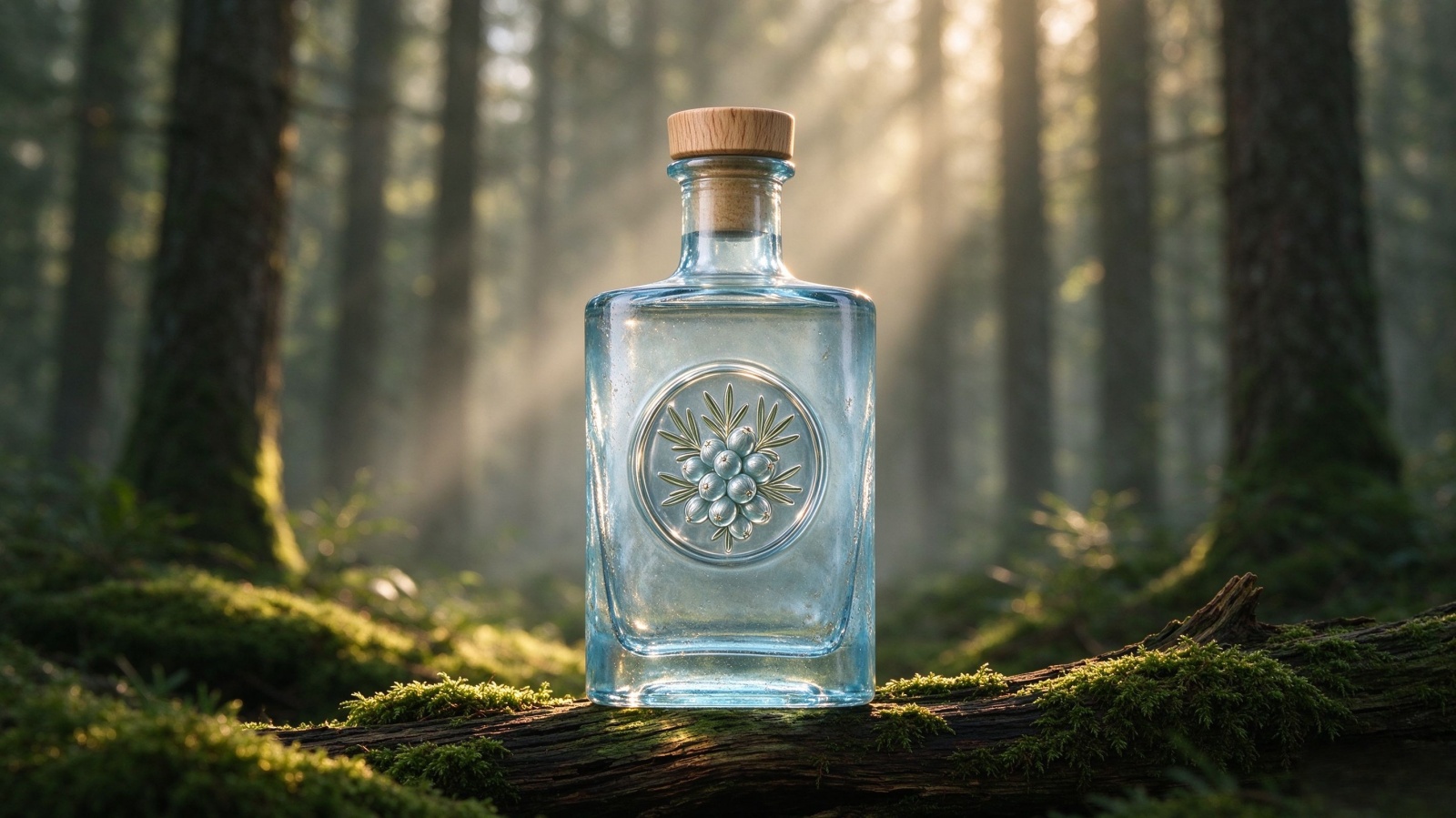
A Scottish craft gin brand wanted to reflect its sustainability values through a packaging upgrade while solving a retail problem: the bottle was too heavy, and shelf turnover was underperforming. We redesigned the bottle as a lightweight custom gin bottle, reducing weight from 575g to 400g—a 30% reduction—using high-ratio recycled glass and incorporating botanical embossing. After launch, the client reported that previously disengaged retailers reordered, sales increased significantly, and the packaging won multiple industry design awards.
1. Executive Summary
For any spirits brand pursuing sustainable custom glass packaging, the challenge is never just weight—it is whether the new bottle still feels premium, tells the brand story, and re-engages retail partners. This case study breaks down how we solved all four simultaneously.
2. Client Background
The client is a craft gin distillery based in Scotland, founded by two sisters, known for distilling premium gin with botanicals foraged from Scottish woodland. The brand's core values are sustainability and respect for nature. Their gin is sold through premium independent retailers in Scotland and online channels, positioned in the mid-to-premium segment.
The client's previous standard 700ml gin bottle weighed 575g. While the quality was solid, two problems stood out: first, the bottle weight increased transport carbon emissions, which conflicted with the brand's environmental positioning; second, some retailers reported that the heavy bottle hurt shelf turnover, and the bottle lacked visual appeal on the shelf.

3. The Challenge
The core tension the client faced was this: how to reduce bottle weight without sacrificing the premium feel and brand recognition on the shelf. Specifically, the client needed to solve four interconnected problems:
- Lighter without feeling cheaper: Bottle weight is a key signal of perceived quality in spirits. Dropping from 575g to 400g—a 30% reduction—risks making the product feel "cheap" if handled poorly.
- Visual presentation of recycled material: The client wanted a high ratio of recycled glass, but recycled glass differs from virgin glass in clarity and tint. The design needed to work with that difference rather than hide it.
- Visualizing the brand story: The client wanted the bottle design to express its "Scottish woodland" DNA—not just look like a generic eco bottle.
- Re-engaging retail channels: Some retailers had shown lukewarm interest in the product. The client needed the packaging upgrade to reactivate those channels.
4. The Solution
Our design team worked closely with the client to redesign the bottle from the ground up—covering bottle structure, glass material, and decoration.
Lightweight Bottle Design
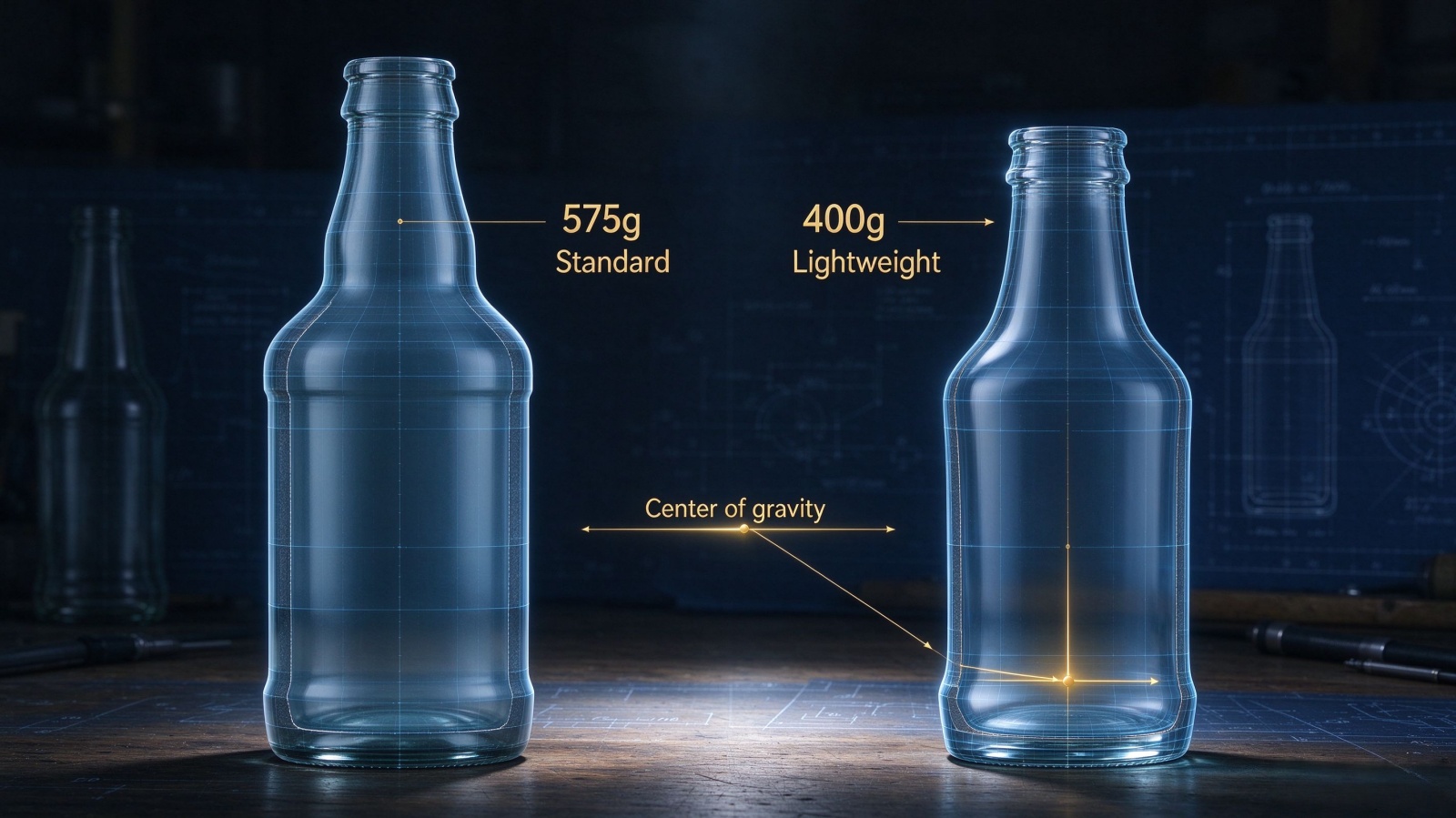
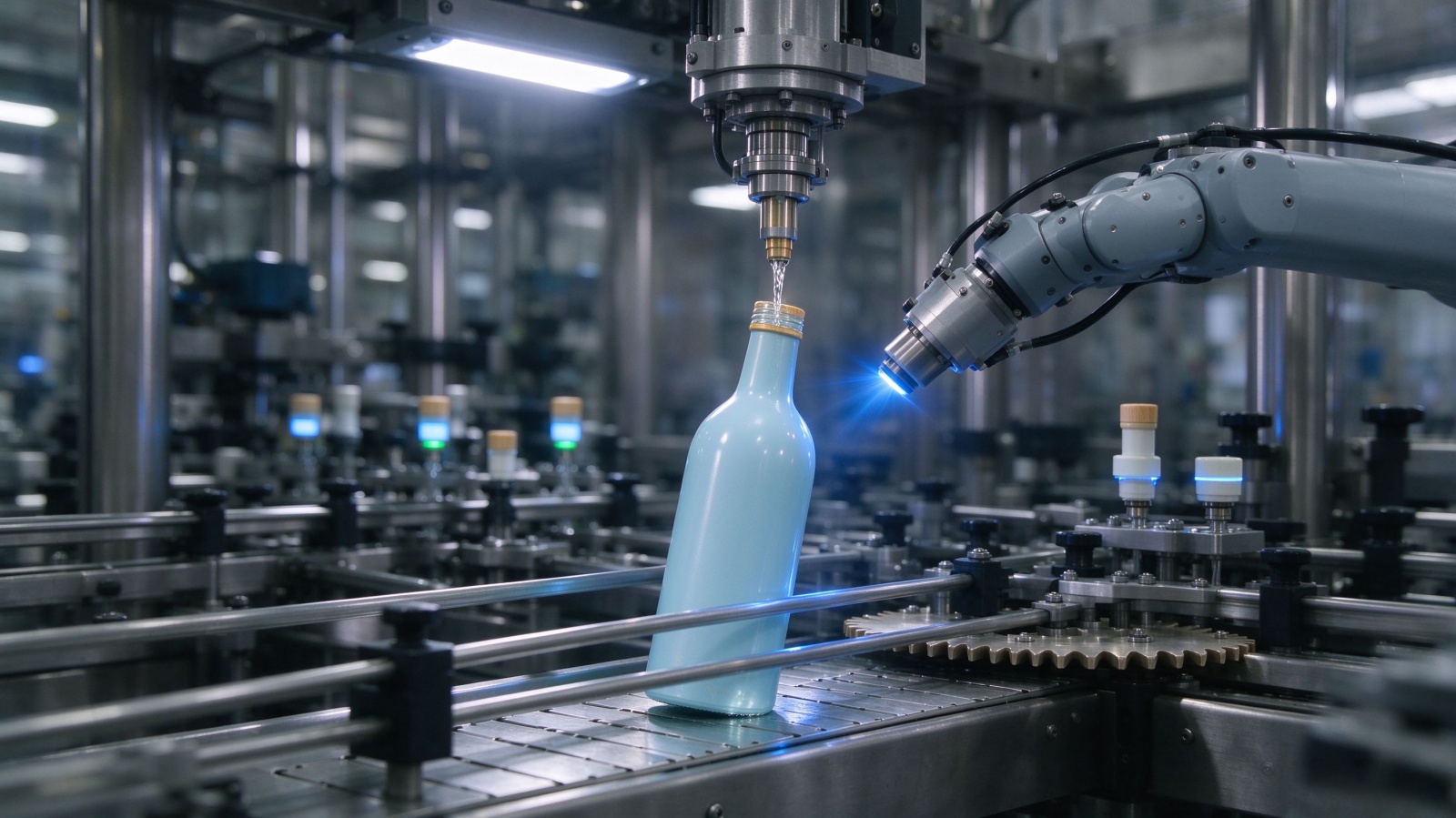
Through structural engineering optimization, we reduced bottle weight from 575g to 400g—approximately 30%—while maintaining mechanical strength and filling line compatibility.
The base was thickened so that even with the overall weight reduction, the bottle still feels substantial in hand. Consumers do not perceive it as "light" or flimsy. The shoulder and body curves were fine-tuned to improve grip and pouring experience.
Sustainable Glass Material
The new bottle uses a high ratio of recycled cullet, significantly reducing carbon emissions during production. We leveraged the subtle color variation inherent in recycled glass to create a bottle with a pale blue tint—blue evoking ocean and sky, reinforcing the brand's nature theme.
Brand Visual Expression
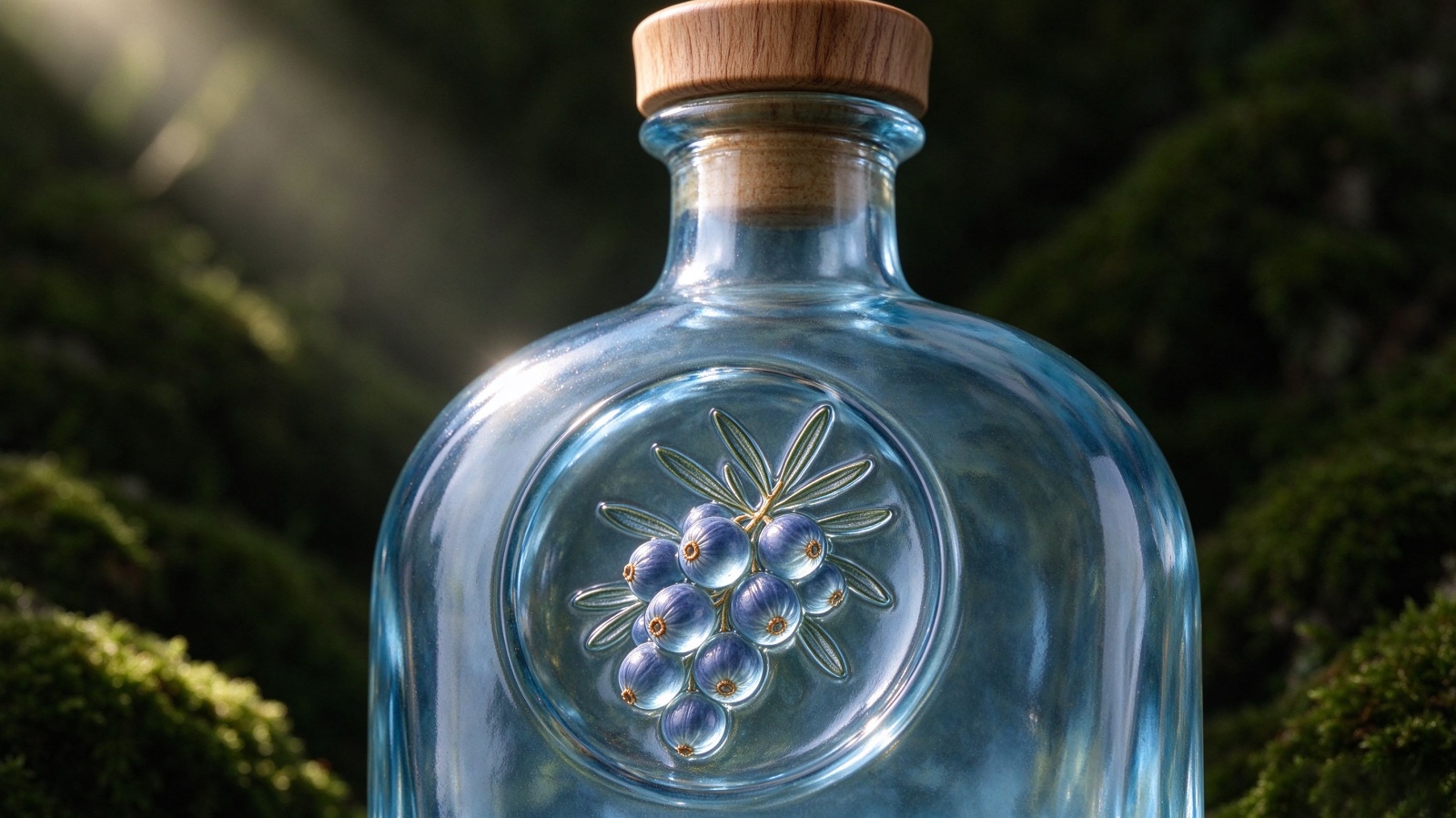
A circular cut-out window was designed into the bottle body, with a juniper botanical emboss embedded inside—directly echoing gin's core botanical and the Scottish woodland brand story. The neck and closure use wood material, creating a natural material contrast with the glass body and reinforcing the handcrafted, small-batch brand character.
Verification and Testing
Before mass production, we conducted filling line compatibility testing to confirm the lightweight bottle could withstand the client's line pressure without breakage or tip-over. Transport vibration testing and drop testing were performed to ensure the reduced-weight bottle remained safe in long-distance shipping.
5. The Results
- 30% weight reduction: Bottle weight dropped from 575g to 400g, significantly lowering per-bottle carbon emissions and helping the client make measurable progress on sustainability goals.
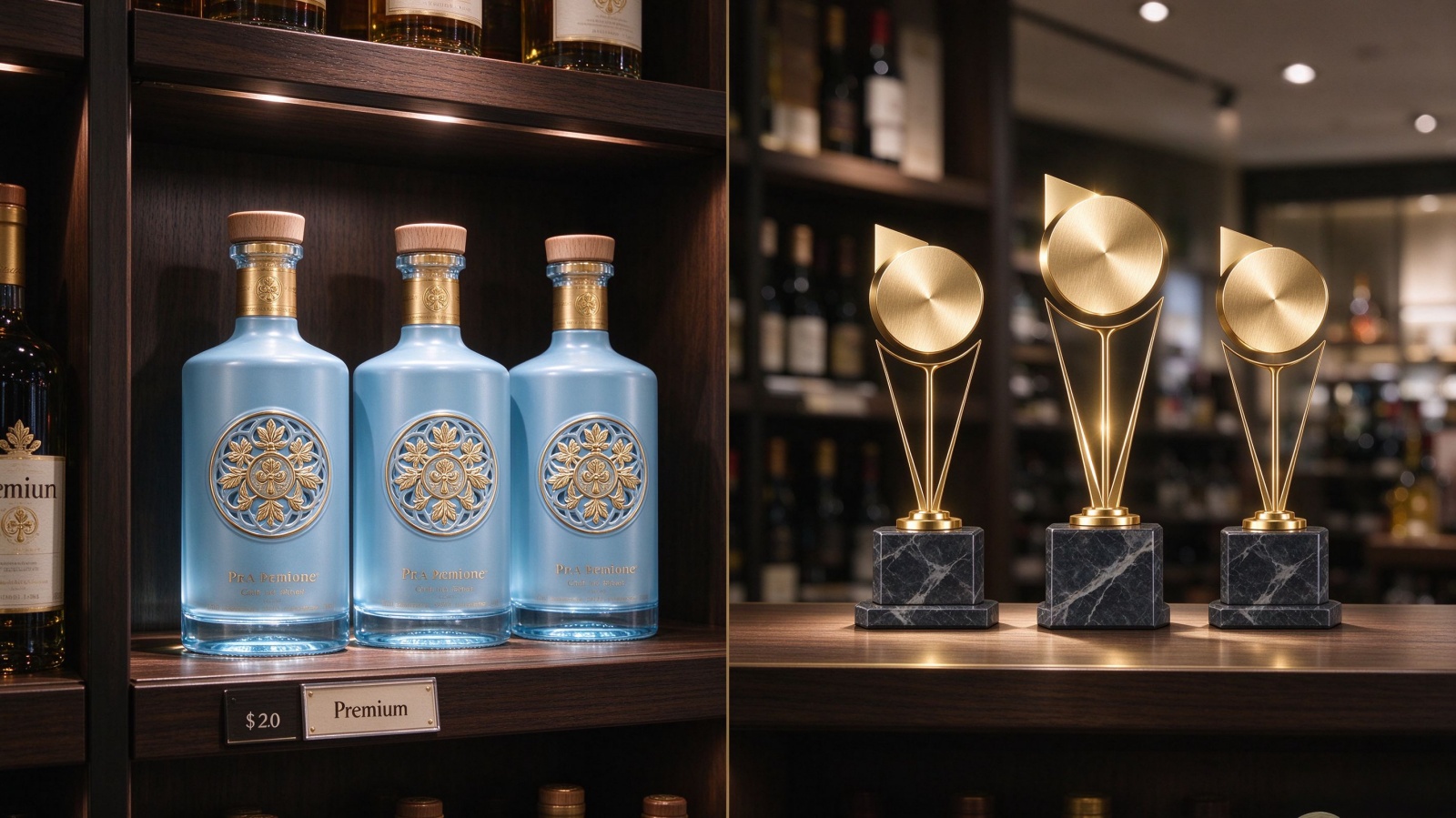
- Retail channel reactivation: The client reported that retailers who had previously shown little interest reordered after seeing the new bottle.
- Sales uplift: The client reported initial sales growth after launch. More importantly, sustained reorder growth was viewed by the client as the most meaningful performance metric.
- Industry recognition: The sustainable custom packaging won two Gold awards at The Spirits Business Design & Packaging Masters and the "Glass Packaging of the Year" award at the UK Packaging Awards.
6. Client Testimonial
7. Call to Action
Planning a sustainable spirits bottle packaging upgrade? Send us your brand positioning and environmental goals. We will provide a lightweight design proposal and carbon emission comparison data within 5 business days. From weight reduction to recycled glass, from structural optimization to decoration, we help you find the best balance between sustainability and premium brand feel.
Whether you need a lightweight custom gin bottle, a sustainable spirits bottle with recycled glass, or a private label liquor bottle that aligns with your environmental positioning, we handle structural design, material sourcing, and decoration in-house. One partner, one timeline, one point of accountability.
Send Us Your Brand Positioning and Environmental Goals
Share your current bottle weight, target carbon reduction, and brand story. We will come back with a lightweight design proposal and carbon emission comparison data — no obligation, no generic sales pitch.