EN

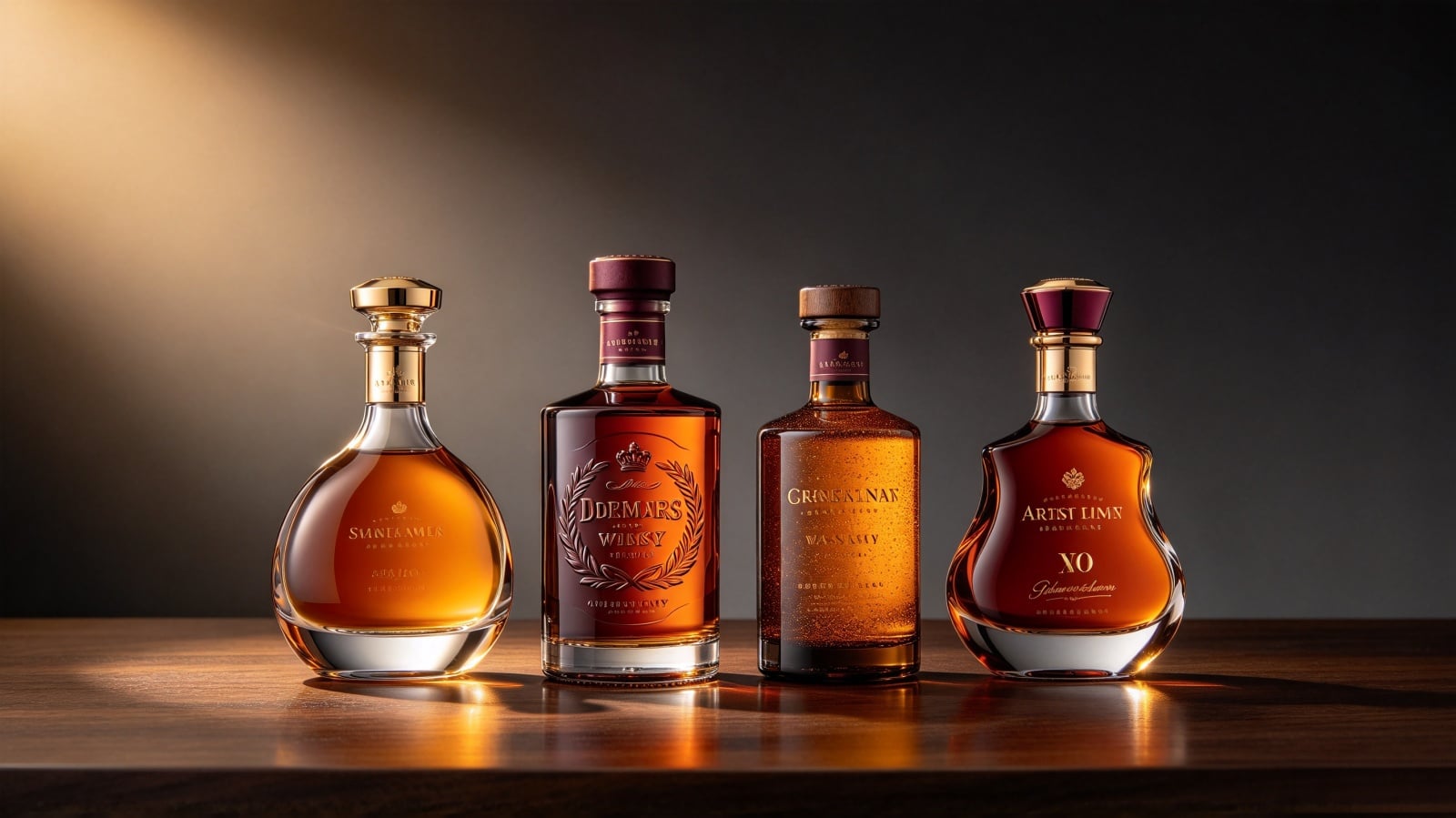
In the competitive 2026 spirits market, the glass bottle has transcended its utilitarian function to become a primary vehicle for brand storytelling and consumer engagement. For B2B buyers — whether you are a craft distillery founder, a private-label project manager, or a packaging procurement lead at an established brand — understanding where bottle design is heading is not an aesthetic exercise. It is a strategic one. The choices made in bottle design and manufacturing are, in essence, choices about how the brand wishes to be perceived.
This article examines the defining trends shaping custom spirits bottle design in 2026, with practical implications for sourcing and specification.
Premium aesthetics with less glass — up to 20% weight reduction while preserving the tactile experience.
Tactile branding at scale — mould-integrated logos replace labels as premium differentiation.
Recycled glass content up to 76% cullet while maintaining premium visual standards.
Collectable limited editions driven by authentic narrative, distinctive silhouettes and gifting value.
1. The Bottle as Brand Strategy
Across the premium spirits category, the bottle is no longer a passive container. It is the primary physical touchpoint between brand and consumer — and increasingly, the deciding factor in unboxing rituals, gifting decisions, and shelf recognition.
For B2B buyers, this shift changes the nature of the brief. The question is no longer "how much does the glass cost per unit" but "what does this glass communicate about the brand — and does it hold up across filling lines, ocean freight and retail lighting?"
Every design decision — weight, geometry, embossing depth, recycled content — has a downstream cost in mould engineering, filling-line changeover and freight. The most successful 2026 briefs start with market positioning, not with aesthetics alone.
2. Trend 1: Lightweight Luxury — The Dominant Design Direction
The most consequential shift in 2026 is the convergence of premium aesthetics with lightweight engineering. For decades, heavy glass was a proxy for quality. That equation is being rewritten.
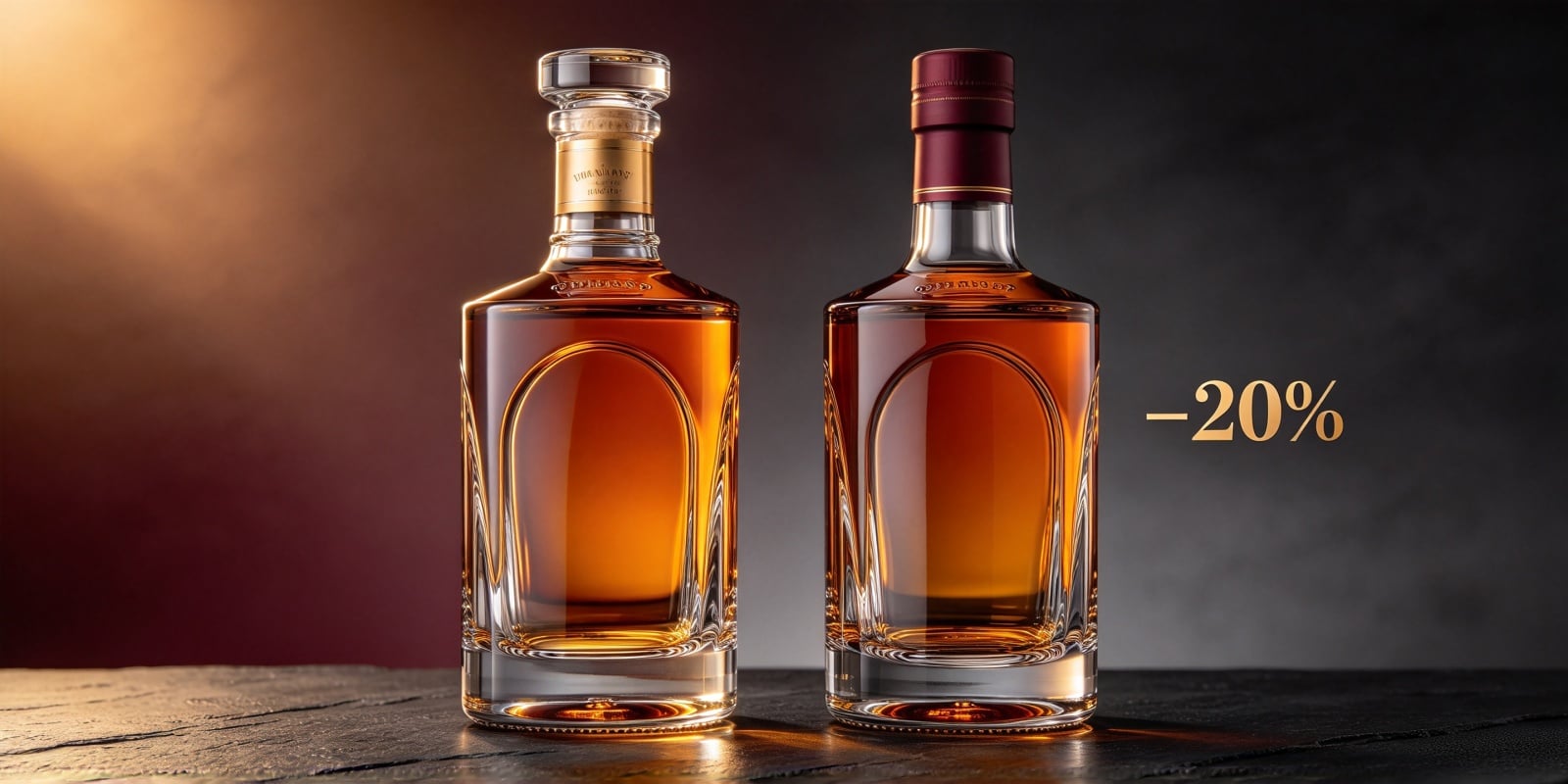
O-I's Contemporary Collection exemplifies this approach: each bottle is available in both a regular version and a lightweight version that retains the signature debossed ring and domed push-up bottom while using less glass in the base, achieving a 20% weight reduction. Critically, these lightweight packages maintain the premium tactile experience that consumers associate with quality spirits.
The design brief for 2026 is not "make it lighter." It is "make it lighter without losing the weight of the brand." For custom liquor bottle buyers, this means working with suppliers who can engineer weight reduction through mould geometry and glass composition rather than simply thinning walls.
3. Trend 2: Embossing and Debossing — Tactile Branding at Scale
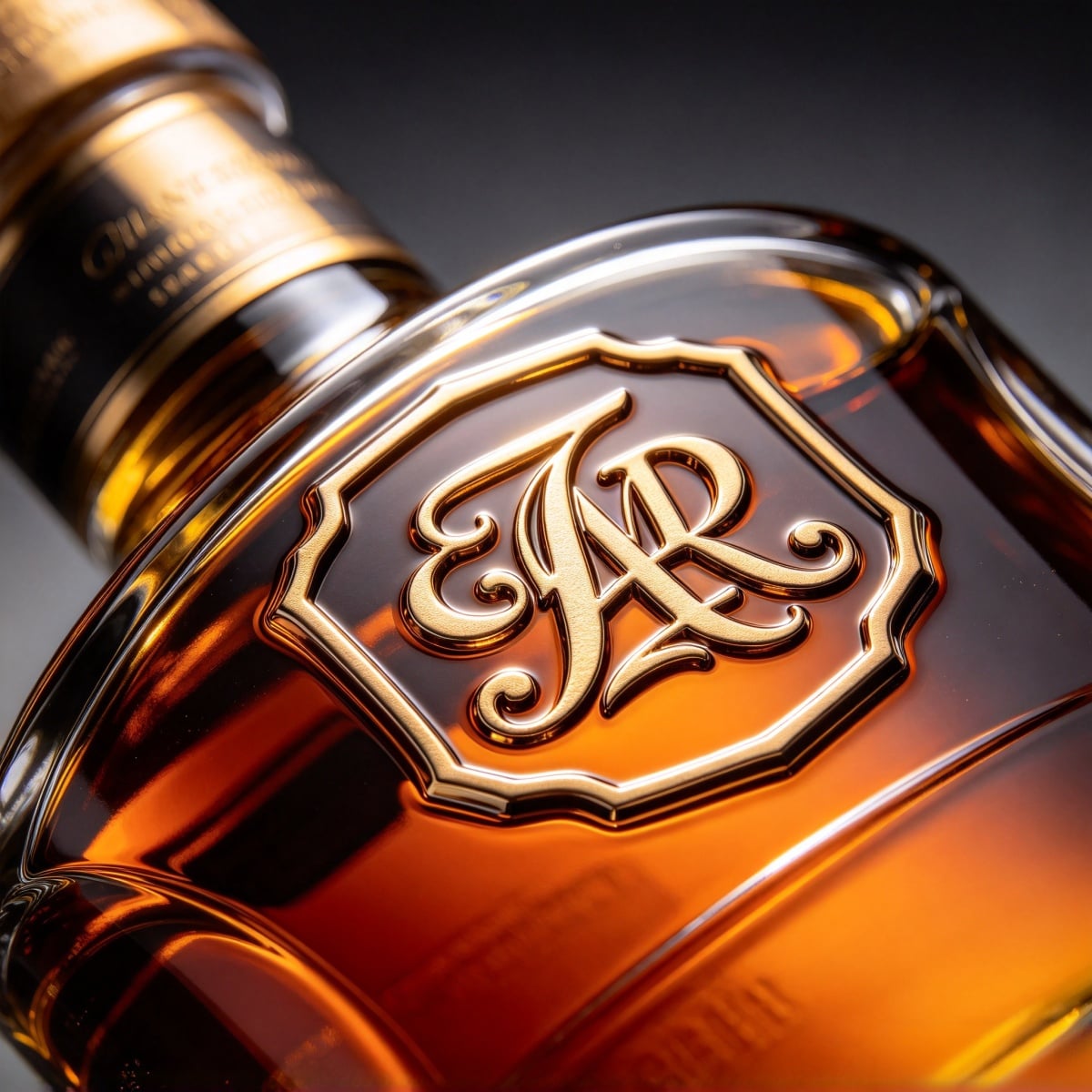
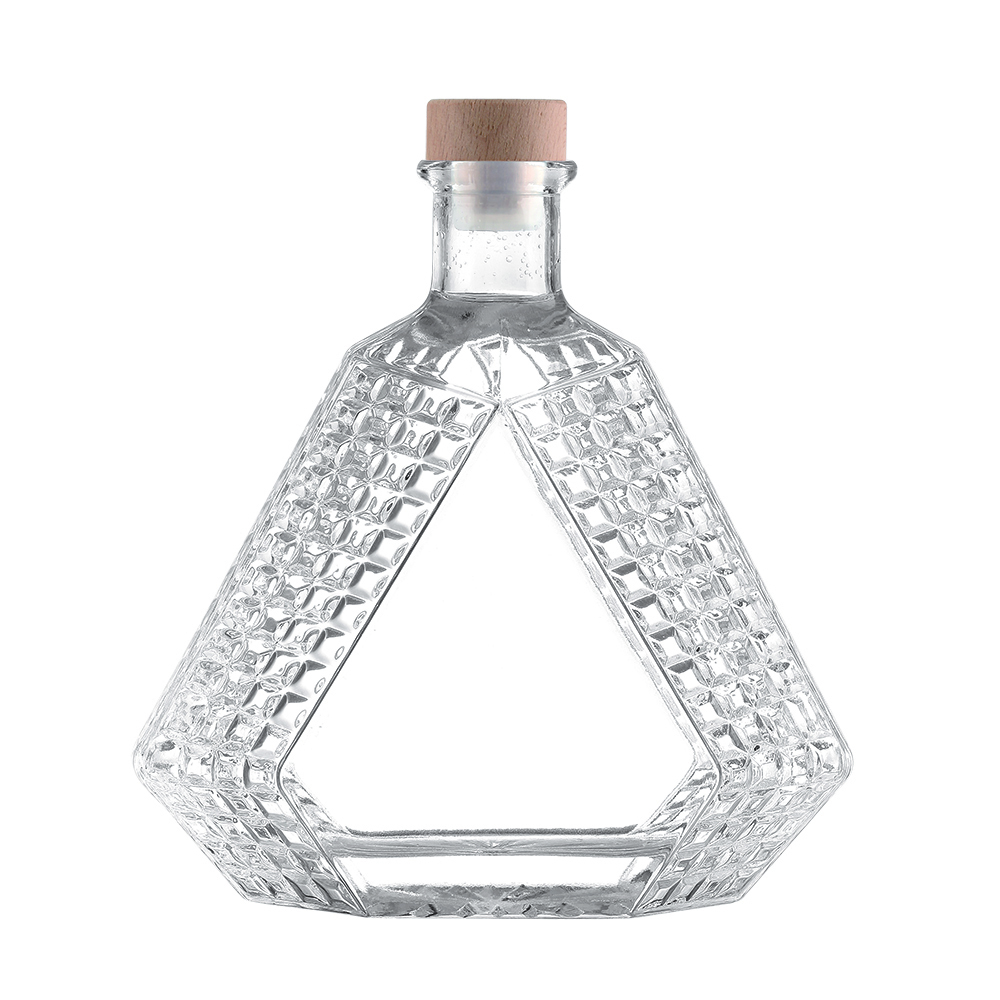
Embossing and debossing have moved from luxury novelty to mainstream brand tool. According to industry analysis, the 2026 design landscape is defined by "hyper-personalization through custom molds, embossing, and debossing, linking tactile sensations to perceived quality."
For B2B buyers, embossing offers two distinct advantages:
- Reduced dependence on labels: A brand can integrate its logo directly into the glass mould, creating a tactile brand experience that no competitor can replicate.
- Higher perceived value on shelf: Embossed liquor bottles command higher perceived value without requiring expensive secondary packaging.
Industry practice shows that a craft spirits brand can pair ceramic screen-printed body artwork with a single hot-stamped gold detail on the neck panel for a prestige effect, while mid-tier brands often specify ceramic screen print on flint glass with a metallic foil accent.
The key procurement consideration is mould cost: adding embossing to an existing bottle design requires mould modification, with production runs as small as 150,000 units and mould costs starting from approximately £4,000.
4. Trend 3: Sustainability as Design Language
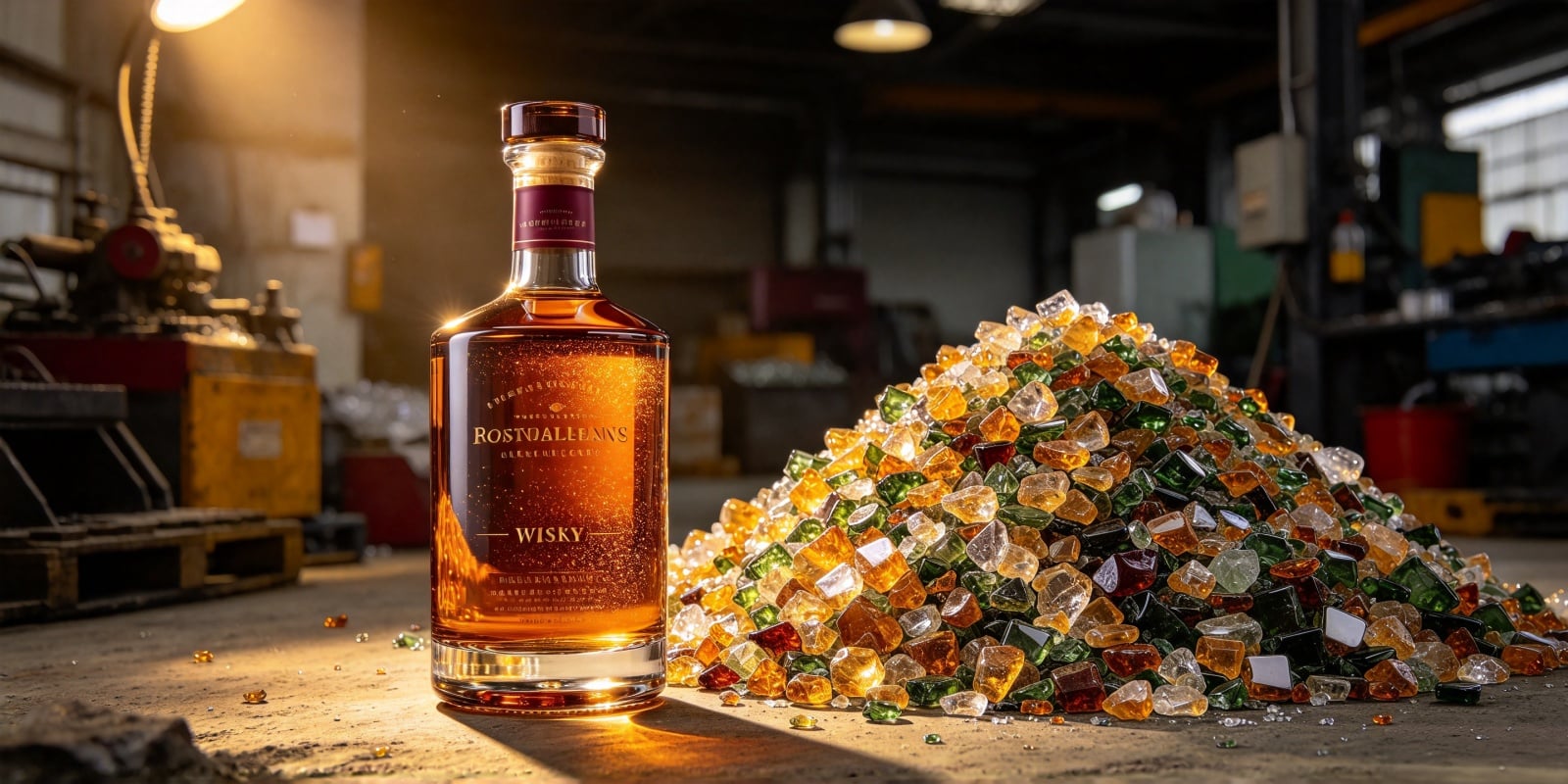
Sustainability in 2026 is no longer a compliance checkbox — it is a design language. The trend manifests in two ways: higher recycled glass content and material reduction through design geometry.
O-I's contemporary range can include up to 33% recycled glass while maintaining a premium visual standard. At the higher end, Verallia's Craft Spirits collection in amber incorporates up to 76% external cullet in France, while its dark-coloured wine bottles contain over 85% cullet across all European manufacturing countries.
| Product Range | Recycled Content | Notes |
|---|---|---|
| O-I Contemporary | up to 33% | Premium visual standard maintained |
| Verallia Craft Spirits (amber) | up to 76% | External cullet, France |
| Verallia Dark Wine Bottles | over 85% | Across all European countries |
For sustainable spirits packaging buyers, the design implication is clear: specify recycled content targets in your bottle brief from the outset. Suppliers with access to closed-loop cullet streams — particularly those serving major distillery clusters — can meet these requirements without compromising colour consistency or clarity.
5. Trend 4: Artist Collaborations and Limited Editions
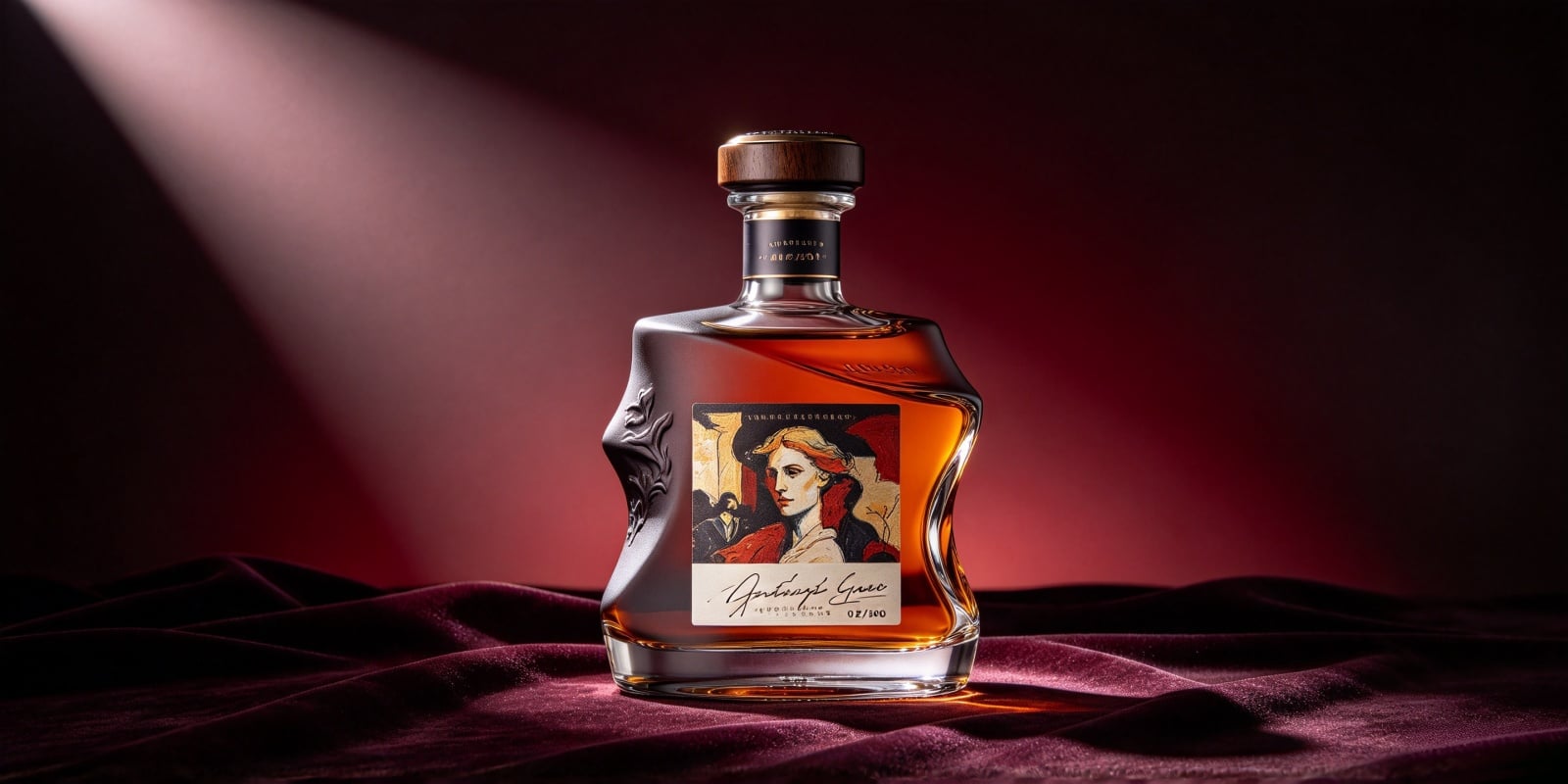
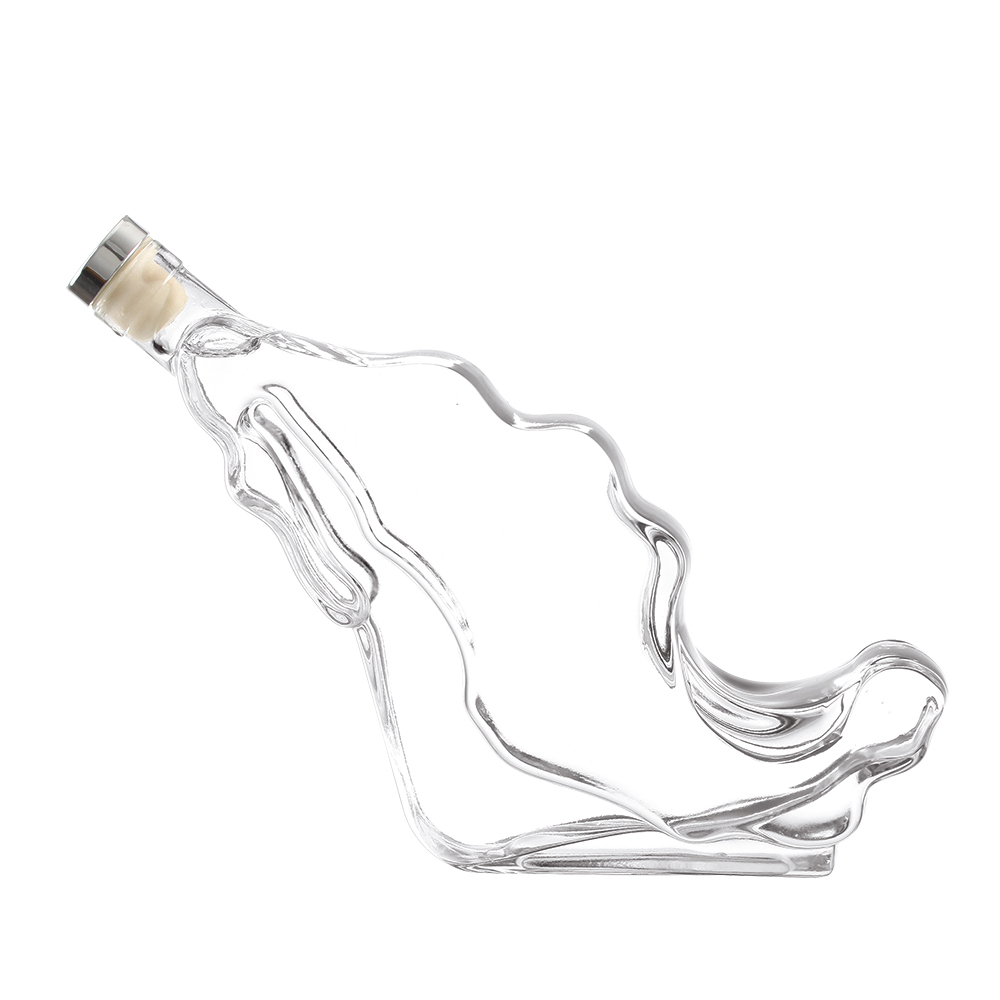
The artist collaboration bottle has matured from marketing gimmick to a genuine category driver. These are driven by "collectability and the desire for authentic narrative." Premium spirits brands increasingly rely on distinctive silhouettes, heavy bases, embossing, textured labels, and specialty closures to create shelf recognition and gifting value.
For B2B buyers developing limited editions, the operational challenge is reconciling creative ambition with manufacturing feasibility. A successful artist collaboration bottle project typically involves three phases:
Align all stakeholders on the visual direction before committing to tooling — avoiding expensive redesigns at the mould stage.
Assess whether the artistic silhouette can be produced at scale — cooling uniformity, wall thickness and mould cost all matter.
Test the artwork, finishing and closures on a 1:1 prototype before mass production — protecting the launch timeline.
Suppliers with in-house design support and rapid prototyping capabilities can compress this cycle significantly.
6. What This Means for Your Sourcing Strategy
The 2026 design trends point to a single conclusion: the most successful spirits bottles will be those that reconcile competing demands — lightweight yet premium, sustainable yet distinctive, artistically ambitious yet manufacturable at scale.
When briefing your glass bottle manufacturer or reviewing supplier capabilities, prioritise partners who can demonstrate:
- Proven lightweight engineering with retained premium aesthetics
- In-house embossing and decoration capabilities
- Access to high-cullet recycled glass streams
- Rapid prototyping for limited-edition projects
| Capability | Why It Matters | Priority |
|---|---|---|
| Lightweight engineering | Weight reduction without losing premium tactile quality | High |
| In-house embossing & decoration | Reduced coordination risk; consistent quality across runs | High |
| High-cullet recycled glass access | Meets 2026 sustainability briefs without colour trade-offs | Medium–High |
| Rapid prototyping | Compresses artist collaboration cycles to fit launch windows | Medium |
| Mould cost transparency | Realistic budgeting for custom embossing and geometry | Medium |
7. Call to Action
Planning a 2026 bottle that needs to reconcile lightweight engineering, deep embossing, recycled content and a limited-edition launch window? Send us your design concept and target market. We will come back with a feasibility assessment and mould cost estimate within 5 business days — no obligation, no vague promises.
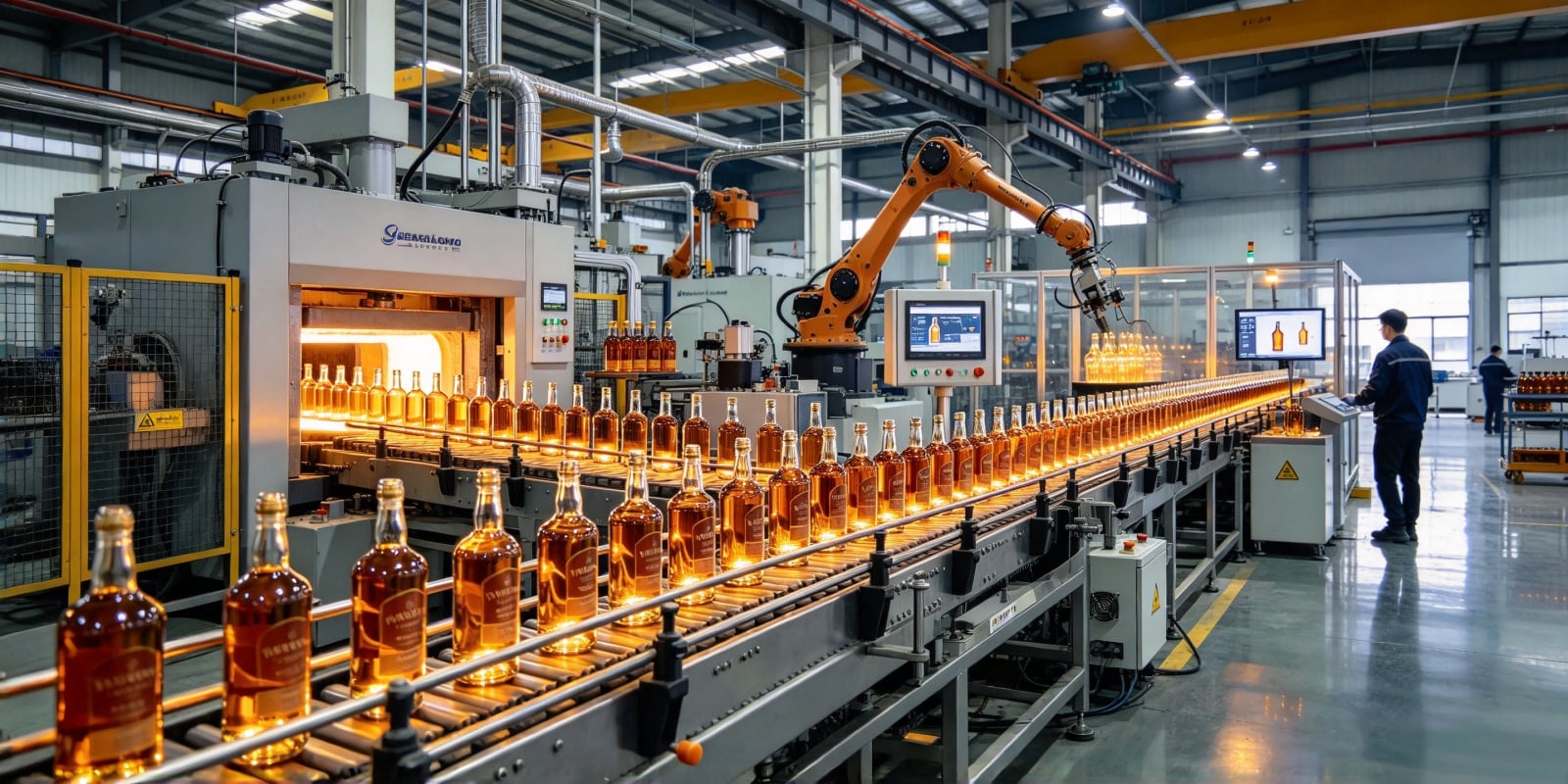
Whether you need a lightweight luxury bottle, a custom embossed spirits bottle, a high-cullet recycled glass bottle or an artist collaboration limited edition, we handle mould design, glass forming, embossing, decoration and inspection in-house. One partner, one timeline, one point of accountability.
Send Us Your 2026 Bottle Design Concept
Share your design direction, target market and volume plan. We will come back with a lightweight feasibility assessment, embossing spec and mould cost estimate — no obligation, no generic sales pitch.



 Hot News