EN


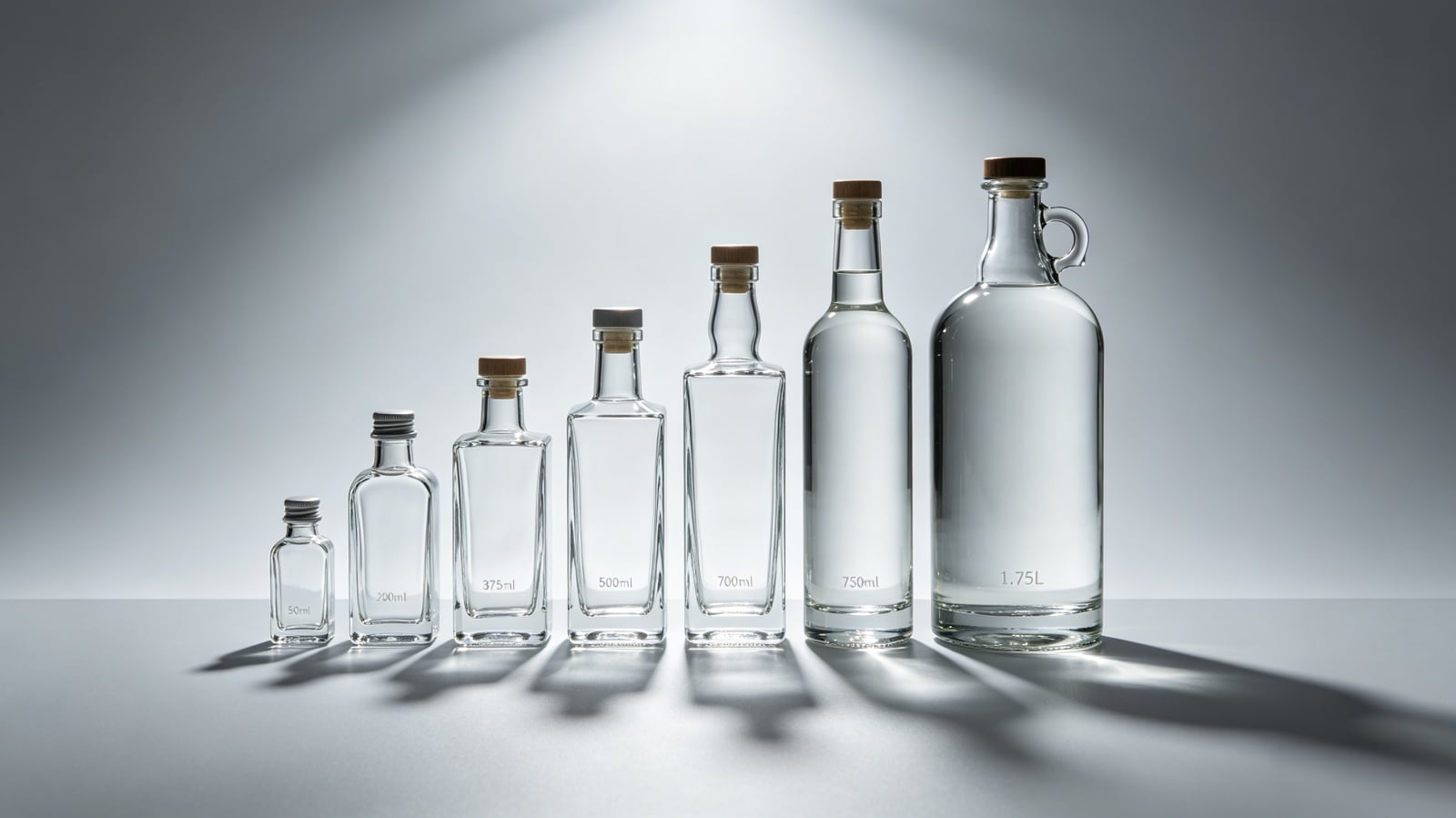
Capacity decisions shape everything from shelf presence to bottling line efficiency. Yet many procurement teams still treat bottle sizing as an afterthought, only to discover mid-project that their chosen format clashes with a target market's regulatory standards, their filler's changeover capabilities, or their distributor's case-pack expectations.
This guide breaks down every major spirits bottle format by use case, market, filling-line compatibility, and shelf performance — so you can specify the right glass from the start.
1. Understanding the Global Size Landscape: Why 700ml and 750ml Coexist
Before diving into individual formats, one structural fact drives much of the complexity in B2B spirits packaging: the United States and the European Union maintain different standard fill sizes for the same product categories.
The 750ml bottle remains the dominant format across North America, a legacy of the pre-metric "fifth" that held one-fifth of a US gallon. When the US formally metricated in 1980, the industry rounded to 750ml, and the name stuck. Today, TTB regulations authorize 25 standards of fill for distilled spirits, including the newer 700ml and 500ml additions effective January 2025.
In the European Union, the core retail standard is 700ml, with 500ml and 200ml also recognized as standardized volumes for spirits. For brands selling across both markets — the standard scenario for most export-focused B2B buyers — the practical solution is a "shared design family": the same bottle silhouette and label panel dimensions, offered in 700ml for EU retail and 750ml for North American distribution. This approach preserves brand identity on shelf while satisfying local regulatory requirements, and it avoids the costly mistake of forcing one fill volume into a market where it reads as "non-standard" to both regulators and consumers.
2. The Full Format Spectrum: 50ml Through 1.75L
Each format serves a distinct commercial function. The table below maps the full spectrum at a glance, and the sections that follow unpack the use cases, filling-line notes and market positioning for each.
| Format | Primary Use Case | Key Market |
|---|---|---|
| 50ml | Sampling, minibar, GWP | Global |
| 100ml / 200ml | Travel retail, gift packs, amenity | Duty free, hotel |
| 375ml | Craft releases, decoration testing | US, global |
| 500ml | RTD base, niche retail | EU |
| 700ml | Core EU retail | EU |
| 750ml | Core North America, global baseline | US, global |
| 1L | Duty free, HoReCa | Travel retail |
| 1.75L | Club stores, on-premise wells | US value |
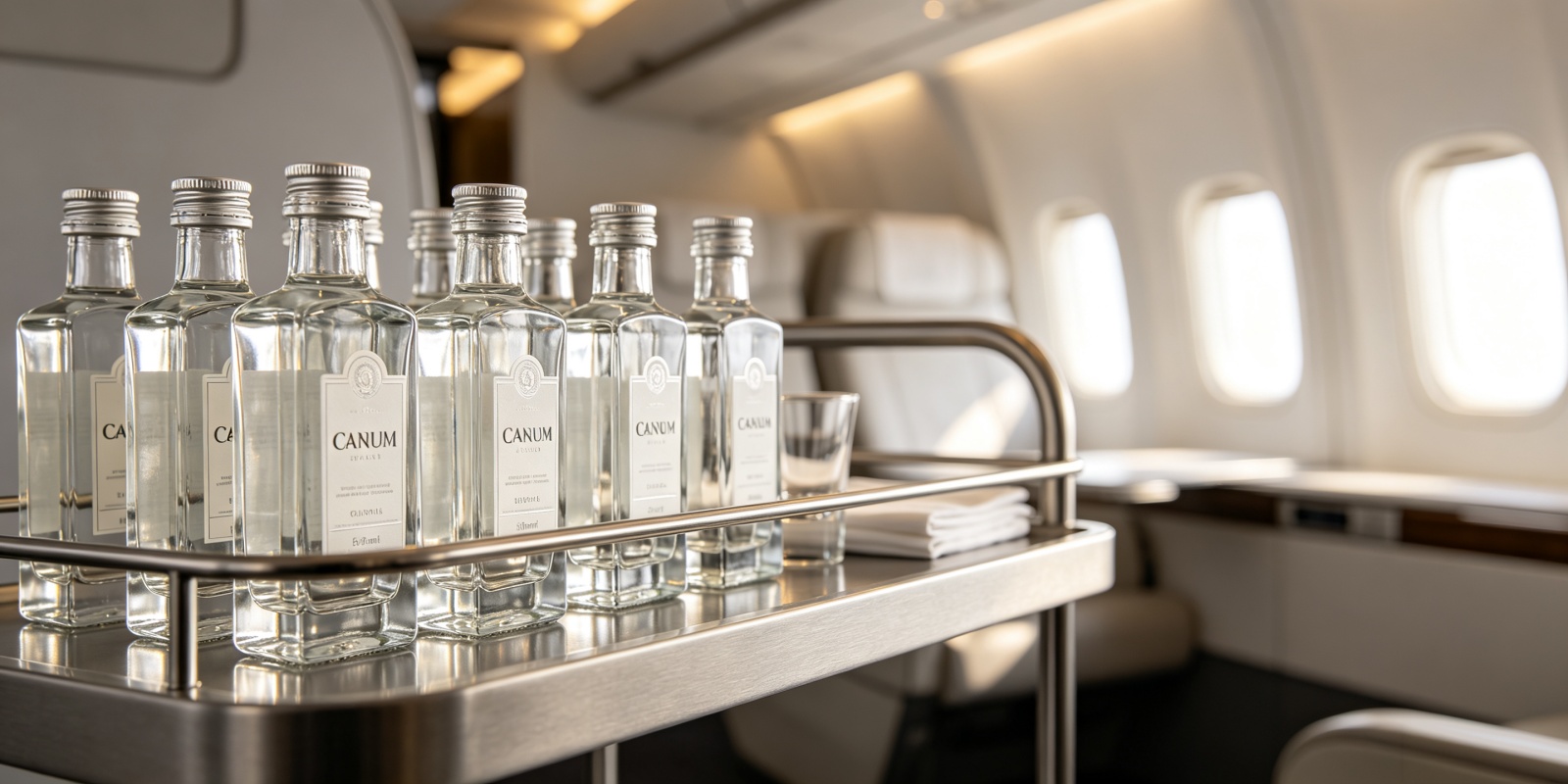
One standard 1.5oz shot. Airline service, hotel minibars, gift-with-purchase and new product trials. Now one of the fastest-growing formats in spirits.
Craft releases, limited runs and decoration testing — validates artwork and finish quality with minimal glass cost before committing to 750ml.
The default for any brand targeting European retail shelves. Core SKU for EU-focused B2B programmes.
The world's most recognized spirits format. Basis for the "9-liter case" — twelve 750ml bottles per case.
Helps travelers use the full duty-free allowance in one purchase. Also strong in HoReCa for value-per-ounce messaging.
Club stores and on-premise bar wells. Approximately 39 standard 1.5oz shots — roughly 2⅓ standard 750ml bottles.
50ml Miniatures ("Nips"): The Sampling and Travel Workhorse
The 50ml miniature — equivalent to one standard 1.5oz shot — has moved from a niche promotional tool to one of the fastest-growing package sizes in the spirits industry. According to NIQ data, 50ml brandy and tequila formats showed the largest market share gains in a recent quarter, as premium brands found that consumers reluctant to commit to a full-size bottle would still pay $16.99 for a single-serving version of a $135 luxury spirit.
For B2B buyers, the 50ml mini serves several commercial functions beyond sampling. Distilleries use them for R&D trials on new expressions without committing to a full production run. Hotels stock them to offer guests a curated brand selection without opening full bottles. And travel retailers deploy them as "trial-driving" incentives — a shopper who buys a 700ml expression can be offered a 50ml of a premium sibling as a gift-with-purchase.
100ml and 200ml: The Travel and Gift-Pack Middle Ground
The 100ml format occupies a specific niche: larger than a single serve, smaller than a half bottle, and often bundled into multi-brand sets. Liquor stores use 100ml sets to let customers sample several brands in one purchase — a vodka, a brandy, and a rum, for example. The 200ml bottle, meanwhile, is frequently used in gift packs and hotel minibar programs where a single 50ml feels insufficient but a 375ml is impractical.
375ml ("Half Bottle" or "Pint"): The Craft and Testing Format
The 375ml bottle has gained traction as a format for testing decoration techniques — screen printing, hot-foil stamping, and other premium finishes — before committing to a full production run on 750ml glass. Its smaller surface area makes it ideal for validating artwork and finish quality with minimal glass cost. For brands launching craft or limited expressions, the 375ml offers a lower-risk entry point that still carries sufficient shelf presence.
500ml: The Niche and RTD Base
While less ubiquitous than 700ml or 750ml, the 500ml format serves specific purposes. It is recognized as a standardized volume in the EU, and it works well as a base container for premium RTD (ready-to-drink) cocktails and spirit-based beverages where a full 700ml exceeds the intended serving size.
700ml: The EU Retail Standard
For any brand targeting European retail shelves, 700ml is the default. EU regulations recognize 700ml as a standard fill for spirits, and consumer familiarity with this format runs deep. If your primary market is the EU, specify 700ml as your core SKU and plan case packs and label dimensions around this volume from the outset.
750ml: The Global "Fifth" Standard
The 750ml bottle is the world's most recognized spirits format, holding approximately 17 standard 1.5oz shots. It is the basis for the "9-liter case" that underpins how the industry reports sales volumes — twelve 750ml bottles to a case. When North American distributors ask for "a case of your product," they almost certainly mean twelve 750ml units.
1L: The Duty-Free Power Format
The 1-liter bottle exists primarily to help travelers maximize their duty-free allowances. Most non-EU jurisdictions allow one liter of spirits above 22% ABV per traveler; offering a 1L format lets shoppers use that allowance fully in a single purchase. For B2B buyers supplying travel retail or hospitality channels, the 1L format delivers a stronger value-per-ounce proposition that resonates with volume-conscious customers.
1.75L ("Handle"): The Value and On-Premise Giant
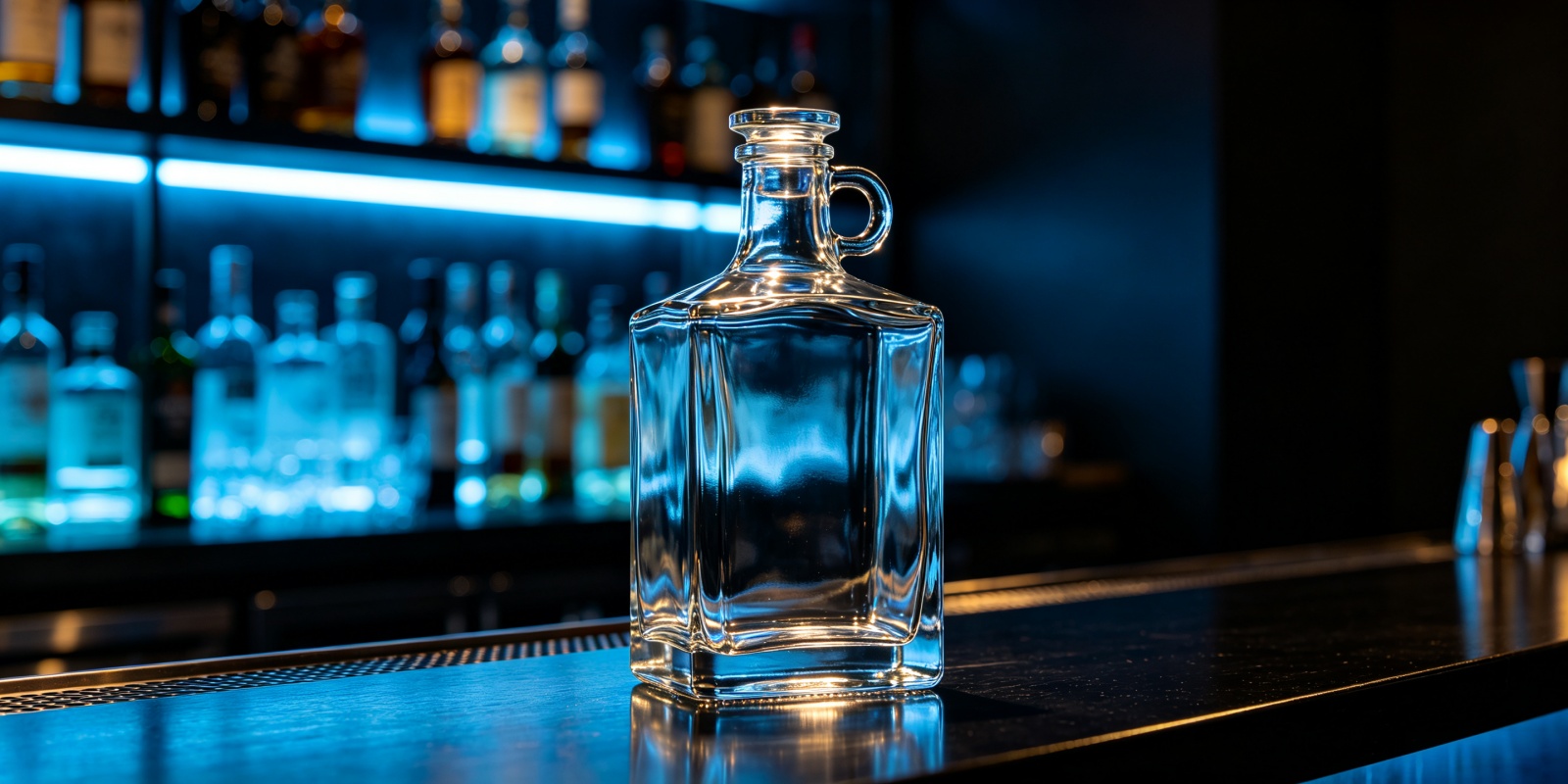
The 1.75L handle is named for the molded glass handle most bottles at this size include, a design feature that aids pouring and handling. It holds approximately 39 standard 1.5oz shots — roughly two and one-third standard 750ml bottles. For bars and restaurants, the handle reduces back-of-house refill frequency and lowers cost per ounce. For club and value channels, it offers an appealing "more for less" proposition.
The 1.75L format is often incorrectly called a "half gallon." It is not — a US half gallon is 1.893L, meaning a true handle is roughly 143ml smaller than a half gallon. Procurement teams budgeting by volume should calculate from 1.75L, not from the half-gallon nickname.
3. Filling-Line Compatibility: What Buyers Must Verify Before Committing
Bottle capacity decisions cannot be made in isolation from the filling equipment that will handle them. A format that works beautifully on shelf can become a changeover nightmare on the line.
Format Flexibility by Equipment Type
Modern flexible monoblocks — such as the Polaris B6 series — can handle bottle formats from 0.100L to 2L without replacing machine parts. Changeover between formats is accomplished through simple adjustments and typically completes in 10–30 minutes, making such lines suitable even for small production batches with frequent format changes.
Less flexible filling systems may require dedicated change parts (stars, dispensers, augers) for each bottle size. If your production plan includes multiple formats — say, 50ml minis alongside 750ml core SKUs — verify with your filler whether the line can accommodate both without significant downtime between runs.
Key Technical Compatibility Points
- Neck finish: Standard spirits necks (30/60, 31.5/38, PP 18/22) determine cap compatibility. If your bottle supplier offers multiple formats, confirm that the neck finish is consistent across sizes — or that your capper can accommodate the variation.
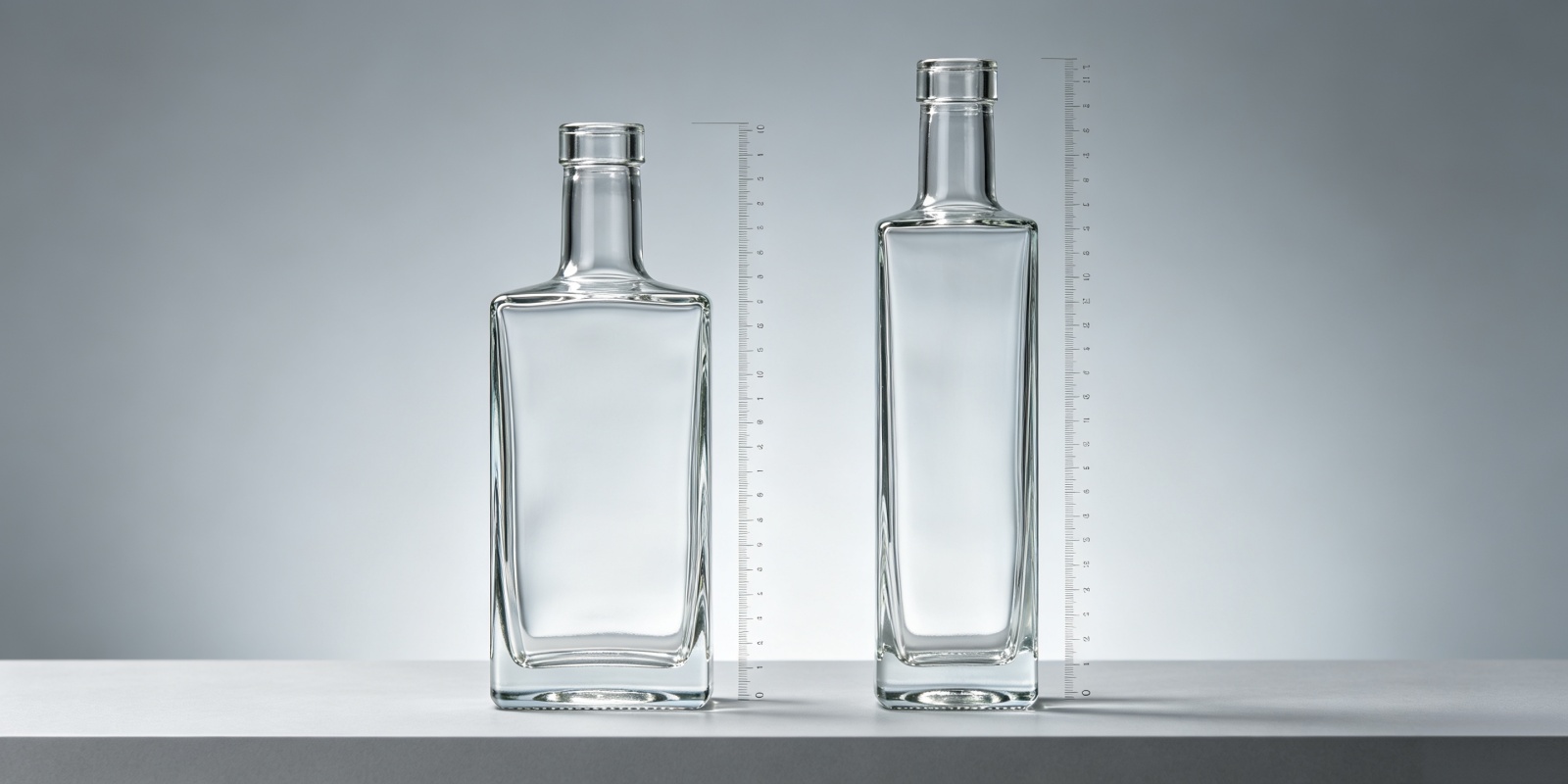
- Bottle height and diameter: These dimensions affect star wheel positioning, guide rail settings, and label placement. A 700ml and 750ml bottle from the same design family may share neck finish and diameter but differ in height, requiring vertical adjustment on filling and labeling stations.
- Glass weight: Lighter bottle weights (for example, 320g for a 100ml versus 170g for a 50ml) influence conveyor stability and capping torque requirements. Very lightweight large formats may require vacuum-assisted handling or modified line speeds.

4. Shelf Display and Market Positioning: Matching Format to Channel
Capacity selection is ultimately a channel strategy decision. The same liquid at the same quality level can succeed or fail based on whether the package size matches consumer expectations for that retail environment.
| Channel | Preferred Format | Why |
|---|---|---|
| Travel retail | 1L / 700ml / 750ml | Captures duty-free allowances; familiar domestic-size formats |
| Hotel minibar | 50ml / 200ml | Curated brand selection without opening full bottles |
| Craft & limited | 375ml | Signals exclusivity; focused canvas for premium decoration |
| Value & club | 1.75L / 1L | Cost-per-ounce messaging for event and home-bar buyers |
| On-premise | 50ml / 750ml / 1L / 1.75L | Cocktails, speed-rail service and high-volume wells |
5. Practical Sourcing Recommendations for B2B Buyers
Define which markets you are serving first (EU, US, duty-free, HoReCa), then work backward to the fill volumes those markets require. A beautiful custom mold in 750ml is wasted if your primary channel is EU retail demanding 700ml.
If you are selling across the Atlantic, specify a shared design family with matching neck finishes, label panel dimensions and visual identity, with height adjusted only as needed for the 5–10mm difference between the two fill volumes.
Before committing to a production order, request sample bottles in your target formats and run them through your filler or a contract packer's line. Changeover time, capping torque, label placement accuracy and conveyor stability are all format-specific variables that cannot be predicted from drawings alone.
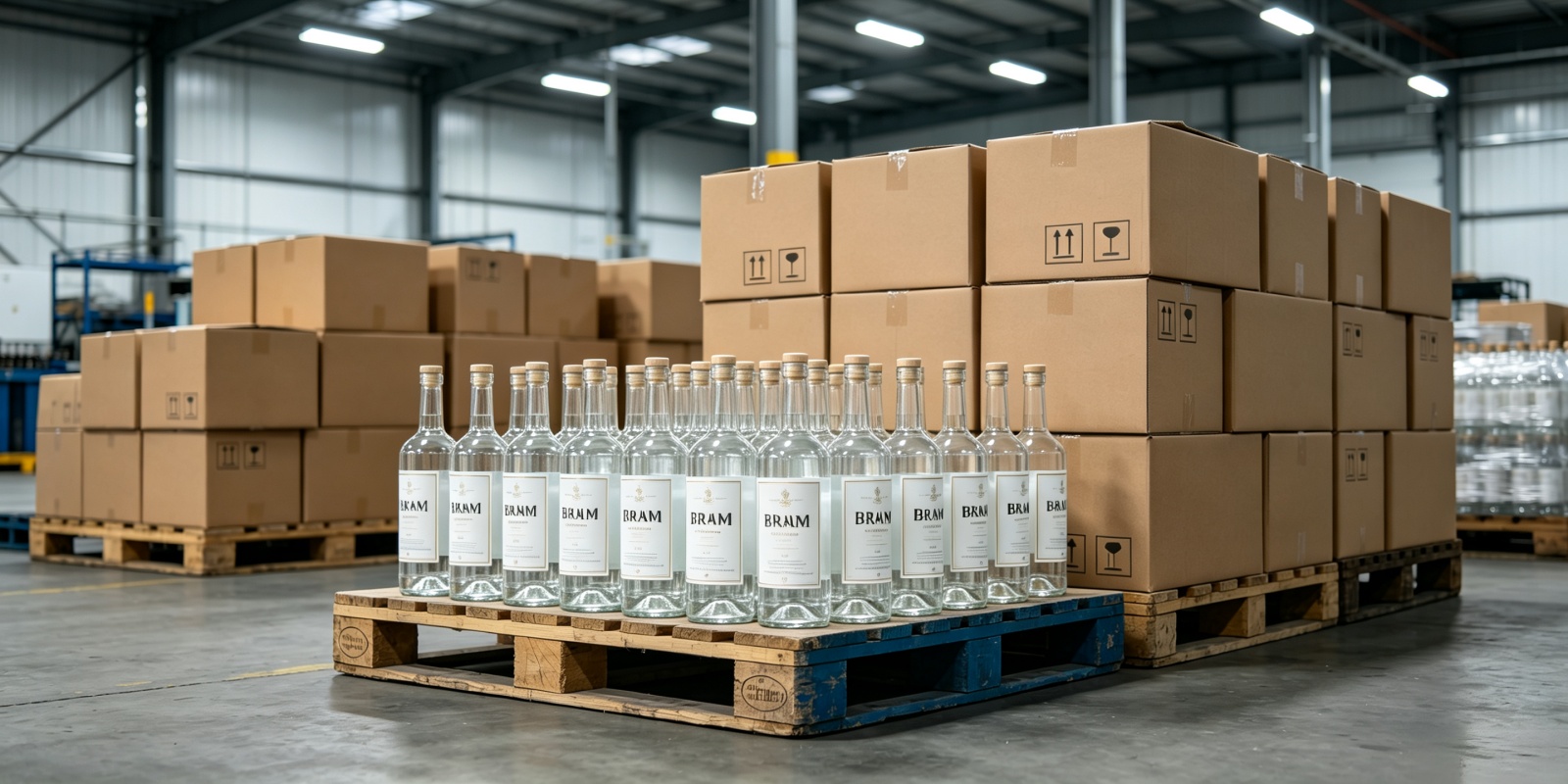
The 1.75L handle and 1L formats change the weight calculus of every case. Confirm divider carton edge-crush ratings, pallet stacking limits and shrink-wrap specifications with your packaging supplier before finalizing a large-format order.
If you are launching a new brand or expression, a 50ml miniature can function as a low-cost trial mechanism for distributors and key accounts. It can also serve as a gift-with-purchase item in travel retail, letting shoppers try a premium expression they might not otherwise buy in full size.
Every additional bottle size adds SKU complexity, inventory management costs and filling-line changeover time. A focused portfolio — one core retail format, one value format, one sampling format — often outperforms a "full range" strategy that spreads resources thin.
6. Format Comparison Summary
| Format | Shots (1.5oz) | Neck Finish | Primary Channel |
|---|---|---|---|
| 50ml | 1 | PP 18 / PP 22 | Minibar, airline, GWP |
| 100ml | 2 | PP 18 / PP 22 | Travel retail sets |
| 200ml | 4 | PP 22 / 24 | Gift packs, amenity |
| 375ml | 8 | 30/60 or equivalent | Craft, testing |
| 500ml | 11 | 30/60 or equivalent | EU niche, RTD base |
| 700ml | 16 | 30/60 (750ml-compatible) | EU retail core |
| 750ml | 17 | 30/60 or equivalent | US & global baseline |
| 1L | 22 | 30/60 or equivalent | Duty free, HoReCa |
| 1.75L | 39 | Wide-format necks | Club, on-premise |
7. Call to Action
Specifying a new bottle size for your next spirits release? Send us your target market, fill volume and channel strategy. We will come back with a format recommendation, neck finish matching and a drawing review within 5 business days — no obligation, no vague promises.
Whether you need a 50ml miniature for sampling, a 375ml half-bottle for a craft release, a 700ml core EU SKU or a 1.75L handle for club channels, we handle mold development, glass production and decoration in-house. One partner, one timeline, one point of accountability.
Tell Us Your Market — We Will Recommend the Right Fill Volume
Share your target markets and channel strategy. We will come back with a format recommendation, neck finish matching and a signed drawing review — no obligation, no generic sales pitch.




 Hot News