EN

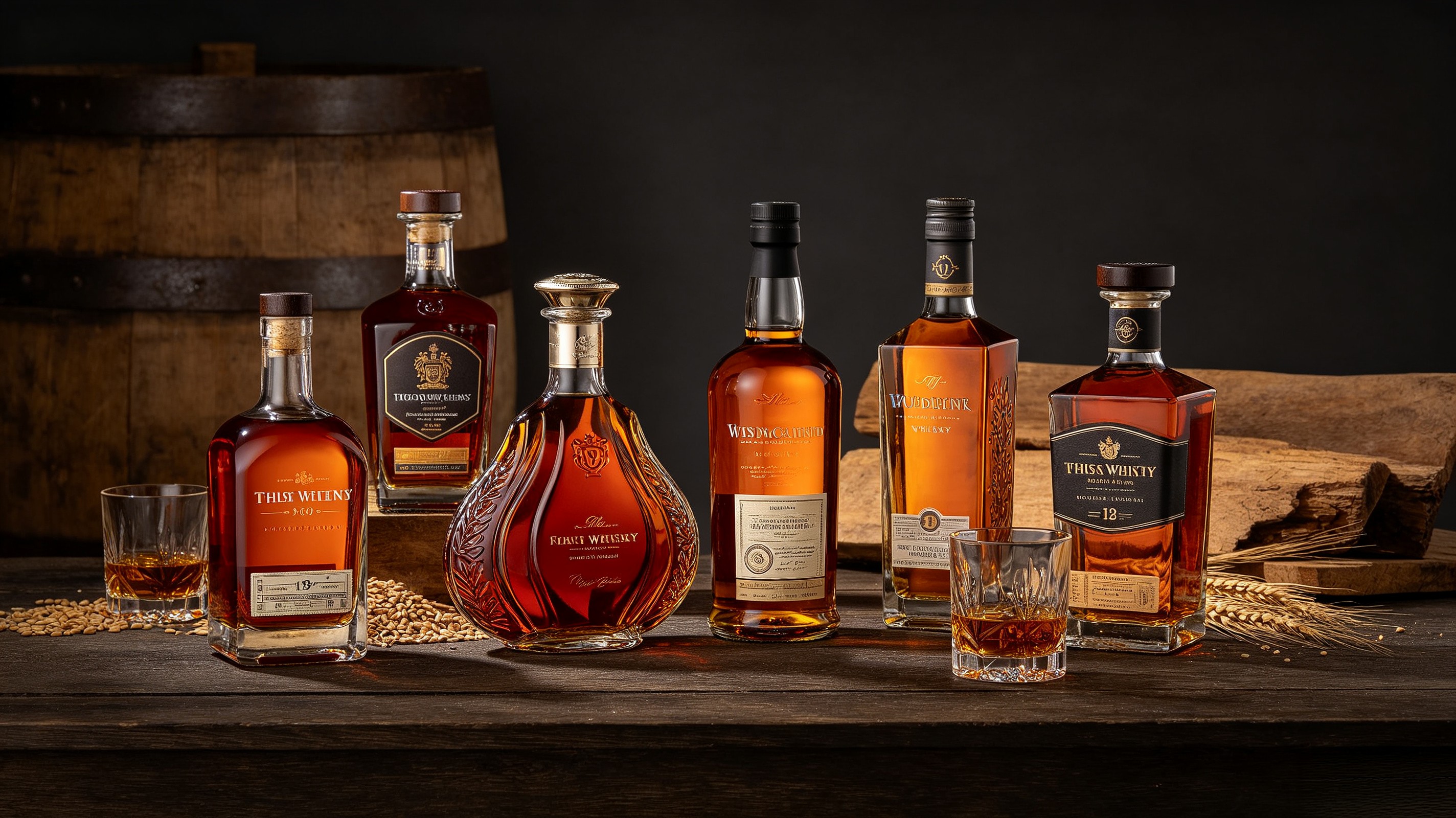
For craft distilleries and established spirit brands, packaging is much more than a functional container — it is the silent ambassador of your brand and a critical touchpoint in the consumer's unboxing ritual. However, sourcing the perfect glass bottle often comes with significant headaches: skyrocketing international shipping costs, a lack of unique design options, rigid Minimum Order Quantities (MOQs) that strain growing distilleries, and navigating complex global compliance laws.
Whether you are launching a new single malt, expanding into international markets, or rebranding a classic bourbon, choosing the right packaging partner is a strategic decision. As a leading B2B liquor bottle manufacturer with years of export experience, we've created this comprehensive guide to help distillery owners and procurement managers navigate the complexities of sourcing custom whiskey bottles.
1. The Weight Factor — Balancing Logistics, Sustainability, and Luxury
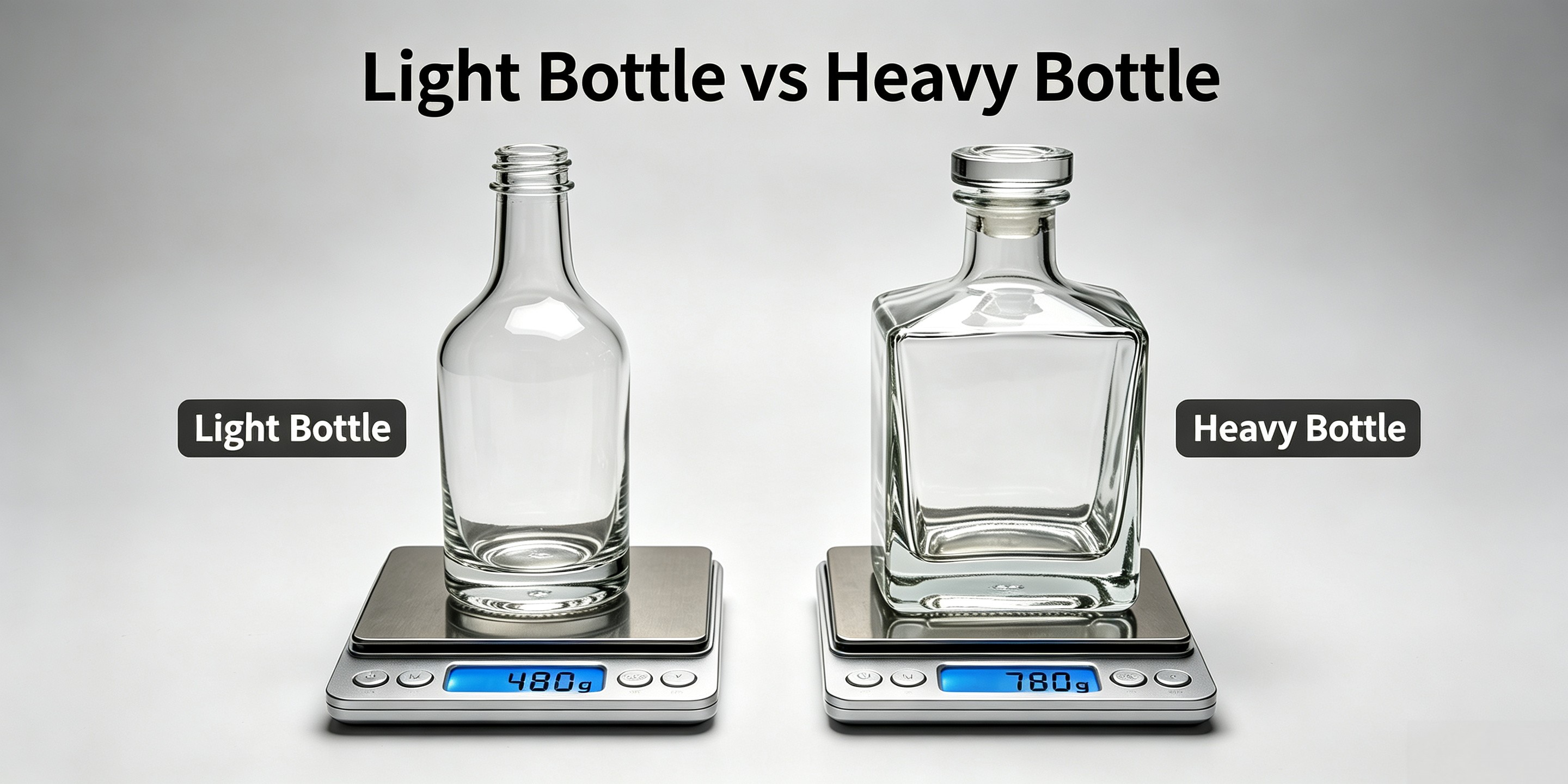
One of the first questions distillery owners ask us during the procurement process is, "how much does a bottle of whiskey weigh?" The answer directly impacts your bottom line and supply chain. A standard 750ml bottle of whiskey weighs approximately 1.2 to 1.5 kilograms (2.6 to 3.3 lbs) when empty, depending on the glass thickness and finish. When filled with liquid (about 750g of liquid), the total weight increases significantly, driving up freight costs, especially for air shipments, LCL (Less than Container Load), or long-haul ocean freight.
When sourcing bottles, you must strike a delicate balance between logistics, brand perception, and ESG (Environmental, Social, and Governance) goals.
- Lightweight Bottles: If your distillery targets high-volume, cost-sensitive markets, lightweight glass bottles can reduce your carbon footprint and shipping expenses. For example, reducing a bottle's weight by 50g might seem small, but over a 20-foot container holding 15,000 bottles, it saves 750kg of weight — translating to direct freight savings. This is a major trend among European distilleries aiming for sustainability.
- Heavyweight (Thick-Bottom) Bottles: For premium, luxury releases (such as a 25-year-old single malt), a heavier bottle conveys heritage, craftsmanship, and quality. Consumers subconsciously associate weight with value. A thick, heavy base often justifies a higher retail price point.
- Freight Optimization: For B2B buyers, we recommend calculating the total landed cost. Sometimes, a slightly more expensive lightweight bottle saves thousands of dollars in ocean freight, while a heavy luxury bottle might require reinforced pallet packaging to prevent breakage.
2. Standard vs. Custom Sizes — Choosing the Right Volume for Global Markets
Understanding standard capacities is essential for regulatory compliance and market fit. A common query we hear from procurement teams is, "how many ml in a bottle of whiskey?" or "how many oz in a whiskey bottle?"
Standard Capacities: While 750ml (25.4 oz) is the standard for the US market, 700ml is the legal standard for the EU and UK. Other popular sizes include 1L (duty-free/travel retail), 500ml, and 375ml (sampler or half-bottle size for bars).
| Capacity | Primary Market | Typical Use |
|---|---|---|
| 50 ml | Global / travel retail | Miniatures, sampling, gift sets |
| 200 ml | Duty free, Asia | Entry format, tasting packs |
| 375 ml | United States | Half-bottle, on-premise |
| 500 ml | EU, Asia | Mid-tier retail |
| 700 ml | EU, UK, Asia | Standard premium whiskey |
| 750 ml | United States | Standard whiskey bottle |
| 1,000 ml | Duty free, travel retail | Value and gifting formats |
| 1,750 ml | United States | Large-format collector editions |
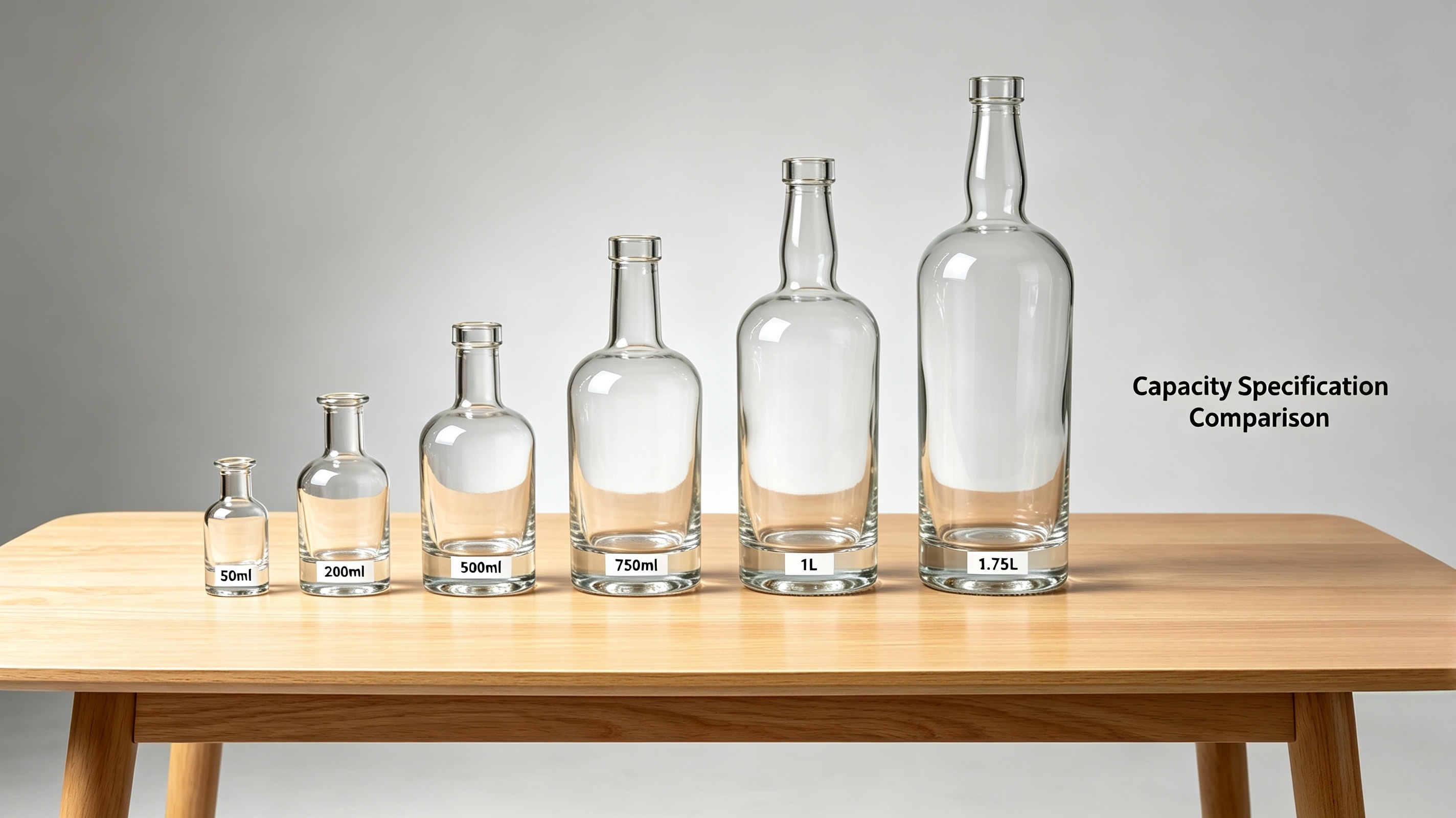
Custom Sizes: If you are wondering "how big is a bottle of whiskey" for your next limited edition, consider your target market. Offering multiple sizes can cater to different consumer needs — from 50ml miniatures for promotional events to 1.75L large-format collector's editions.
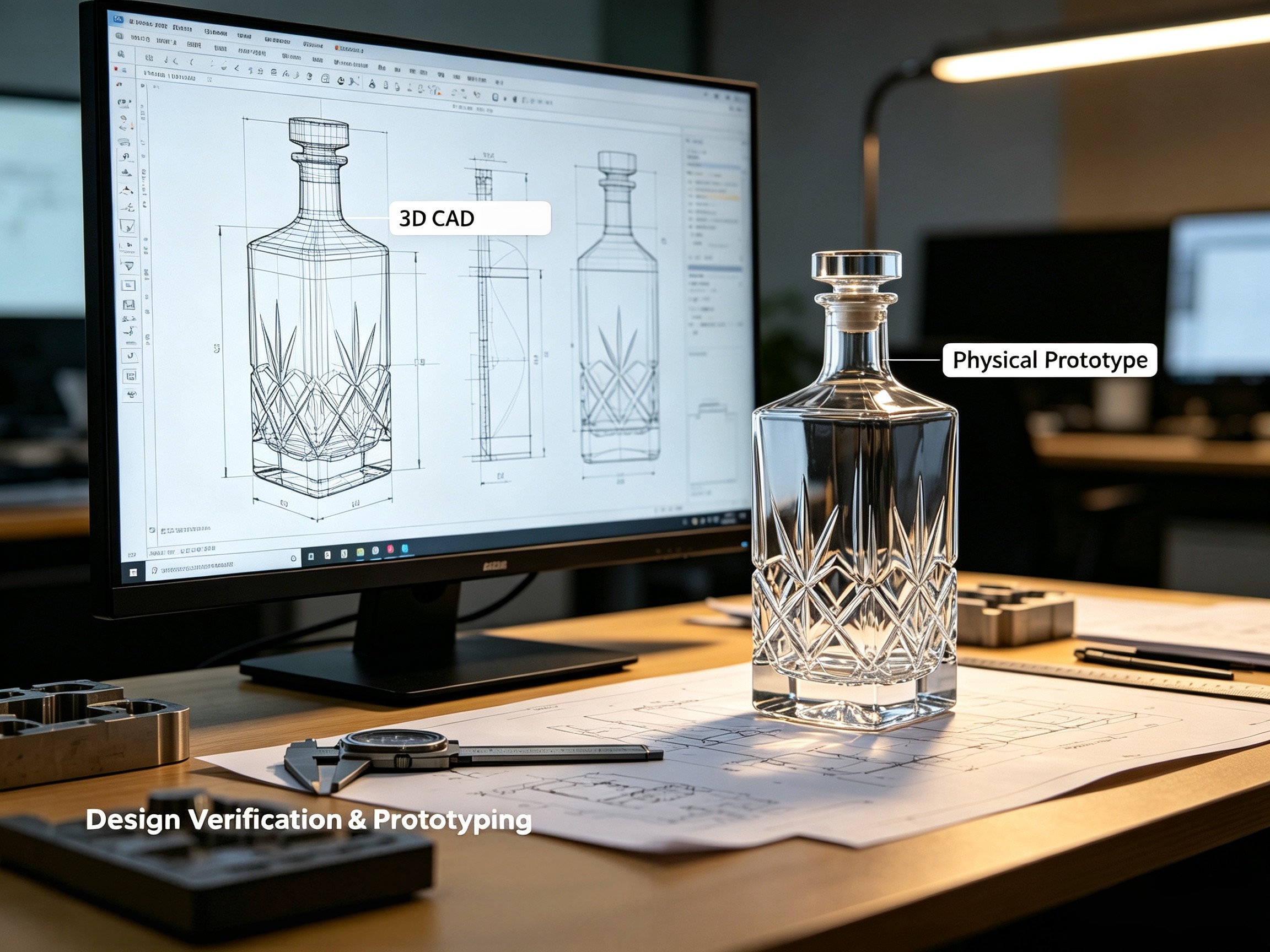
As a full-service custom glass bottle manufacturer for spirits, we offer custom mold development. Whether you need a specific height, width, or an entirely unique silhouette (e.g., square, decanter-style, or flask-shaped), our engineering team can bring your vision to life. The custom mold process involves:
Our team creates a 3D drawing based on your sketch or concept, ensuring the bottle's center of gravity is optimized for bottling lines.
We produce the metal mold, which typically takes 15–20 days.
We produce pre-production samples for your testing (fill, label, cap fit) before mass production.
By investing in custom mold development, your brand stands out on crowded shelves and builds a unique brand identity that generic stock bottles cannot achieve.
3. Finishes and Closures — Elevating Brand Identity and Anti-Counterfeiting
The tactile experience of opening a whiskey bottle is a ritual. Your choice of finish and closure plays a massive role in this sensory experience and brand differentiation.
Closures (Caps & Stoppers)
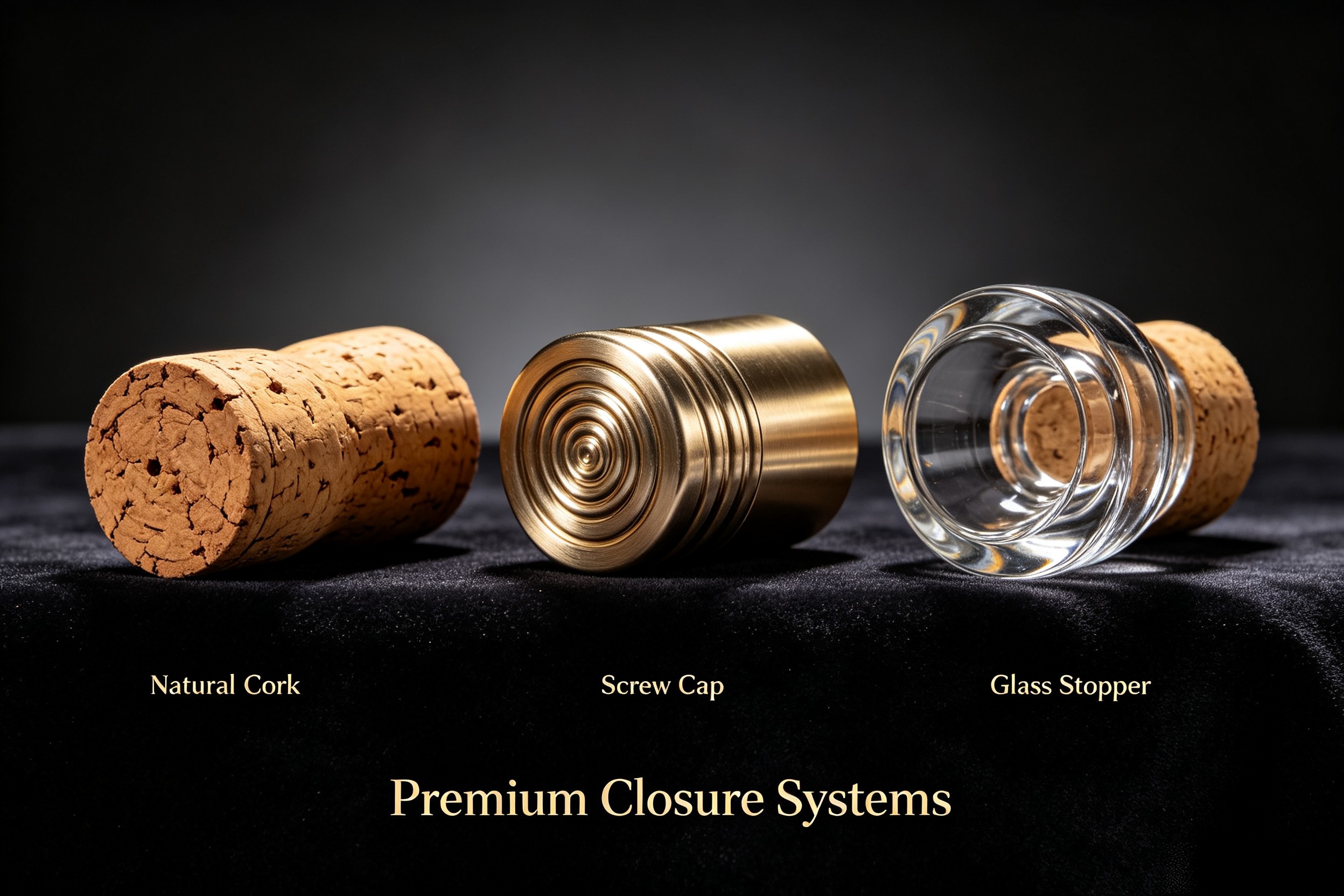
Choose between natural cork, synthetic cork (T-corks), or premium glass stoppers. For high-end spirits, a heavy glass stopper with a cork base screams luxury. For everyday blends, high-quality screw caps (like GPI 28-410 or 30-35) offer convenience and tamper-evidence. We also offer custom wooden caps or engraved metal caps for ultra-premium brands.
Surface Finishes & Decorating
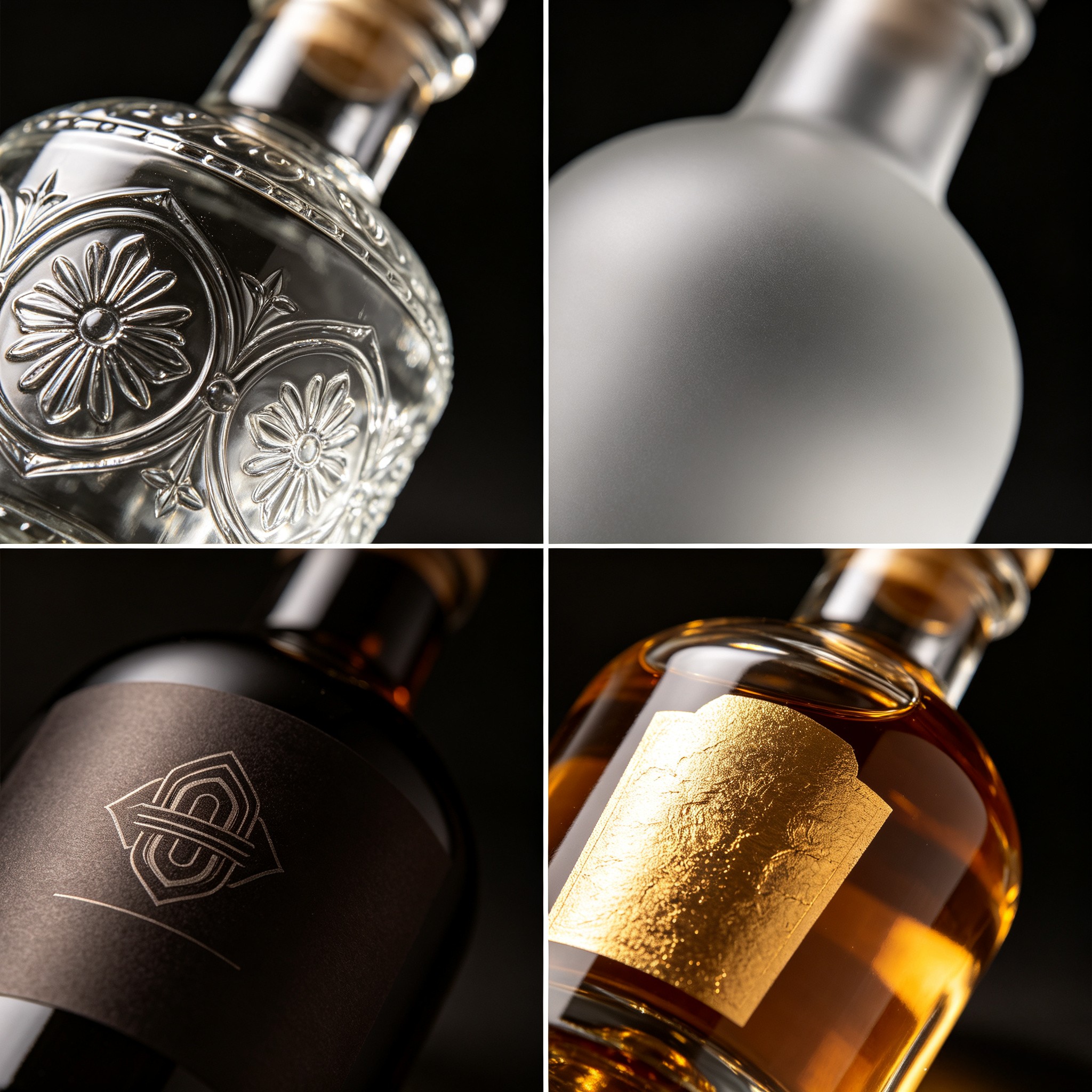
Elevate your bottle with custom embossing (raised glass designs), debossing, matte or glossy frosting, or vibrant screen printing. Advanced techniques include:
- Electroplating / UV Coating: For a metallic, mirror-like finish.
- Hot Stamping: Applying gold or silver foil to the glass.
- Decal / Transfer Printing: For complex, multi-color designs.
These finishes not only enhance shelf appeal but also protect your brand from counterfeiting. A uniquely embossed bottle is much harder for counterfeiters to replicate. Furthermore, our decorating processes are lead-free and comply with FDA and LFGB food-grade standards.
4. MOQ, Lead Times, and Supply Chain Management — Partnering for Scalability
We understand that rigid MOQs (Minimum Order Quantities) are a major barrier for craft distilleries and emerging brands. As a flexible B2B supplier, we offer tiered MOQs to support your growth.
- Stock Bottles: For standard stock bottles (e.g., 750ml round or square), our MOQ starts at 5,000 units. These are ideal for new distilleries launching their first product line.
- Custom Molds: For fully custom molds, our MOQ typically starts at 10,000 units, depending on the complexity of the design and the mold cost amortization.
Lead Times and Quality Control
Regarding lead times, transparency is key. Stock bottles can be shipped within 15–20 days. Custom mold development and production usually require 30–45 days, excluding ocean freight time (which can take 20–40 days depending on the destination port).
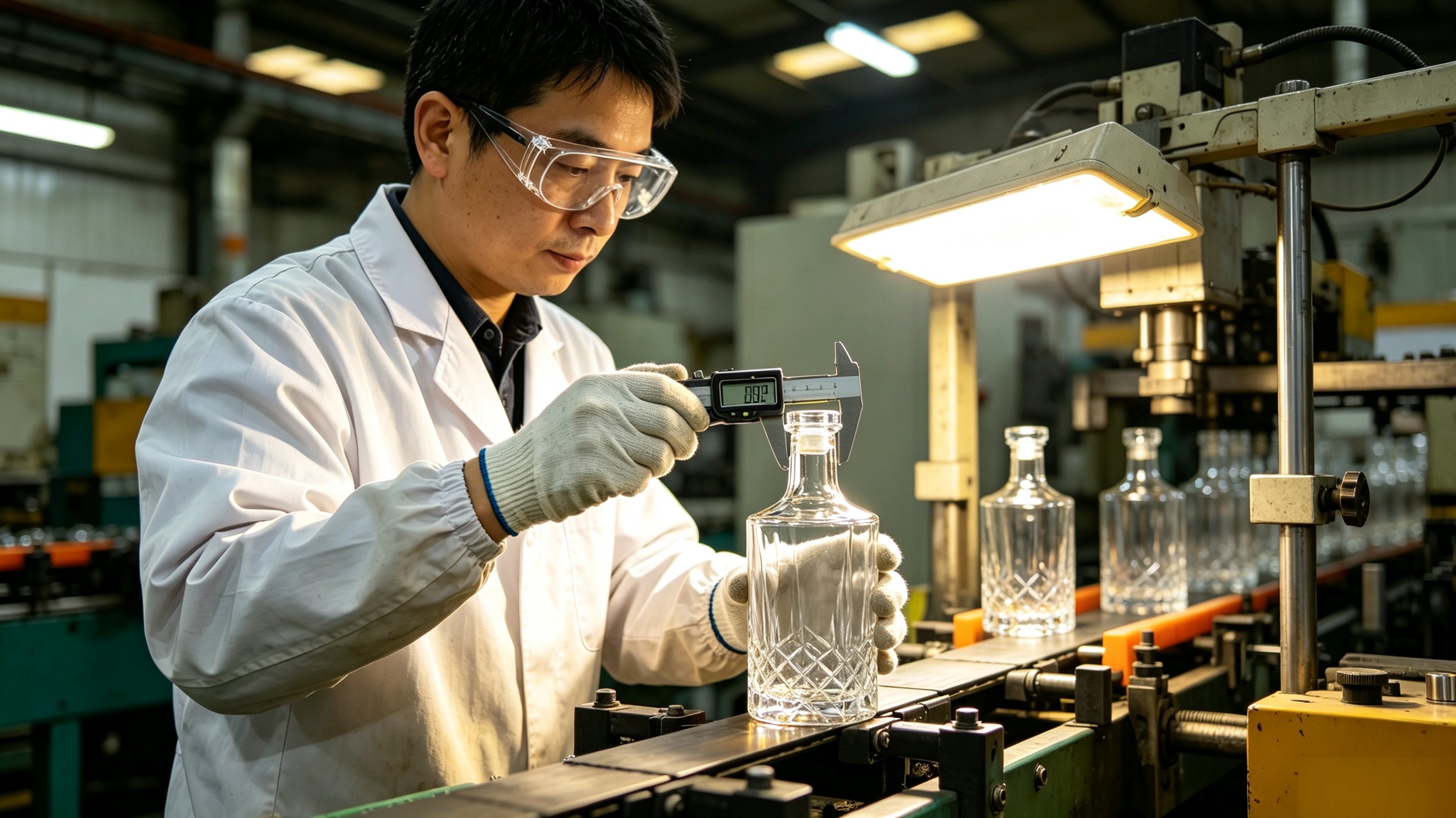
To ensure your production line never runs dry, we implement strict quality control (QC) procedures:
- Raw Material Inspection: Testing the glass sand and chemicals.
- In-Process Inspection: Checking the bottle dimensions, weight, and annealing (stress testing) during production.
- Pre-Shipment Inspection: AQL 2.5 standard inspection for cracks, bubbles, and finish defects.
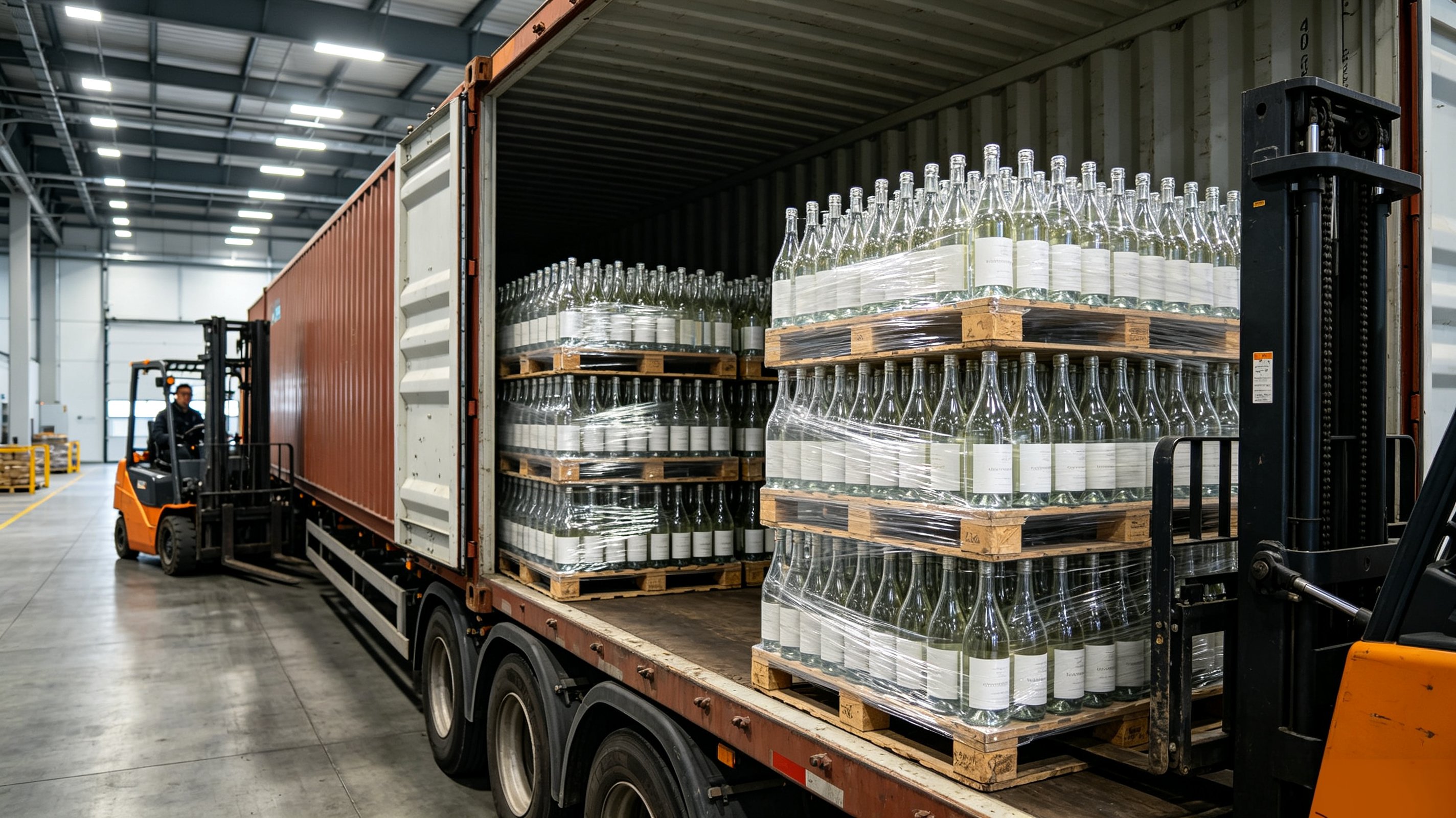
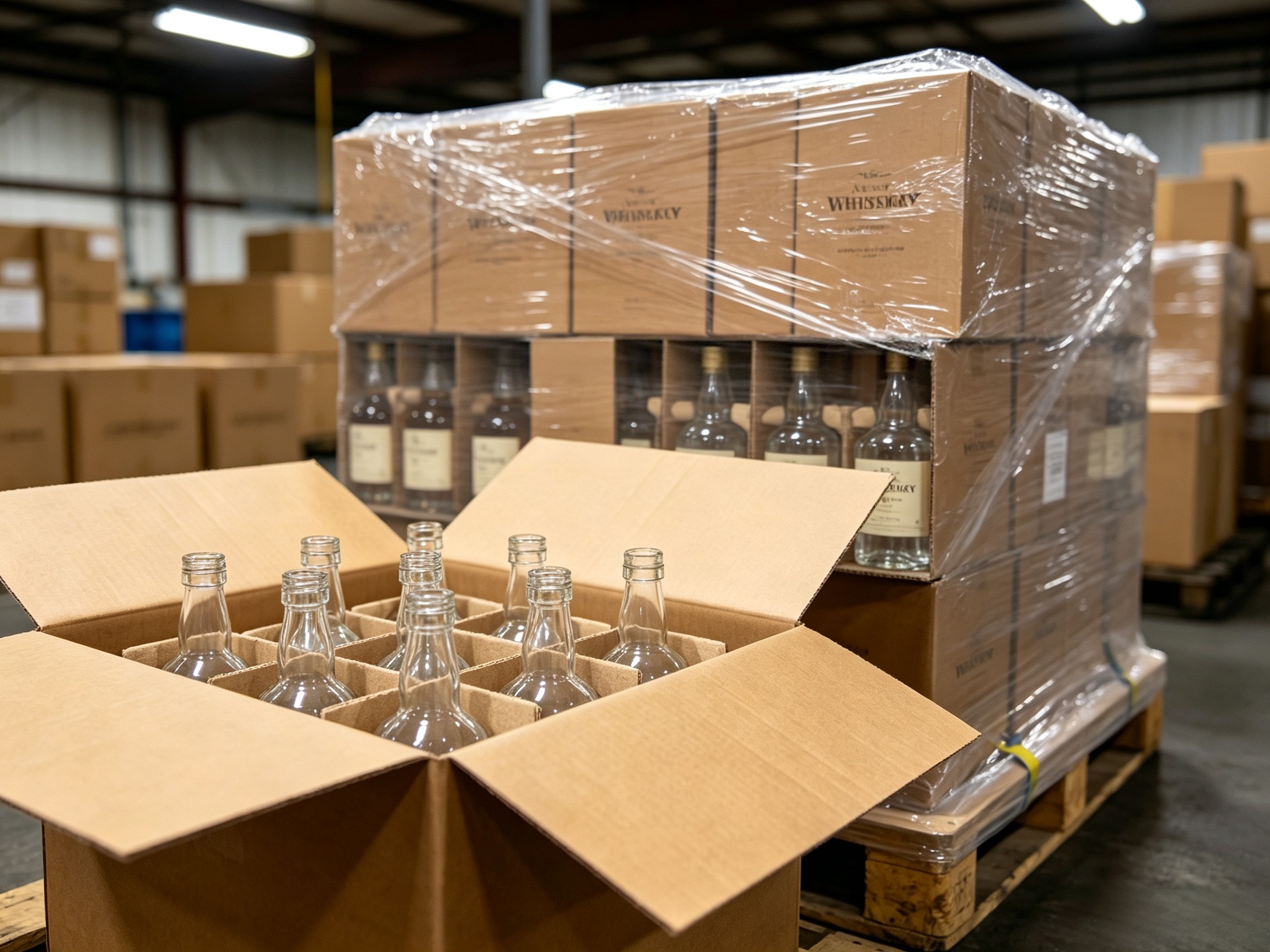
We also provide tailored packaging solutions (e.g., partitioned cartons, palletized shrink wrap) to minimize breakage during long-haul ocean transit.
5. Cost Breakdown — Understanding the Total Landed Cost
Many buyers focus solely on the unit price (FOB price). However, a true B2B procurement strategy must consider the Total Landed Cost (TCO), which includes:
- Mold Fee — One-time cost for custom designs.
- Unit Price — Based on volume, weight, and decoration.
- Packaging & Palletizing Costs.
- Inland Freight to Port & Ocean Freight.
- Import Duties & Taxes.
- Insurance.
By optimizing the bottle weight and design for efficient container loading (e.g., designing a bottle that allows 20,000 units per 40HQ container instead of 15,000), you can drastically reduce your per-bottle logistics cost. Our team provides a comprehensive cost analysis to help you find the most cost-effective solution without compromising quality.
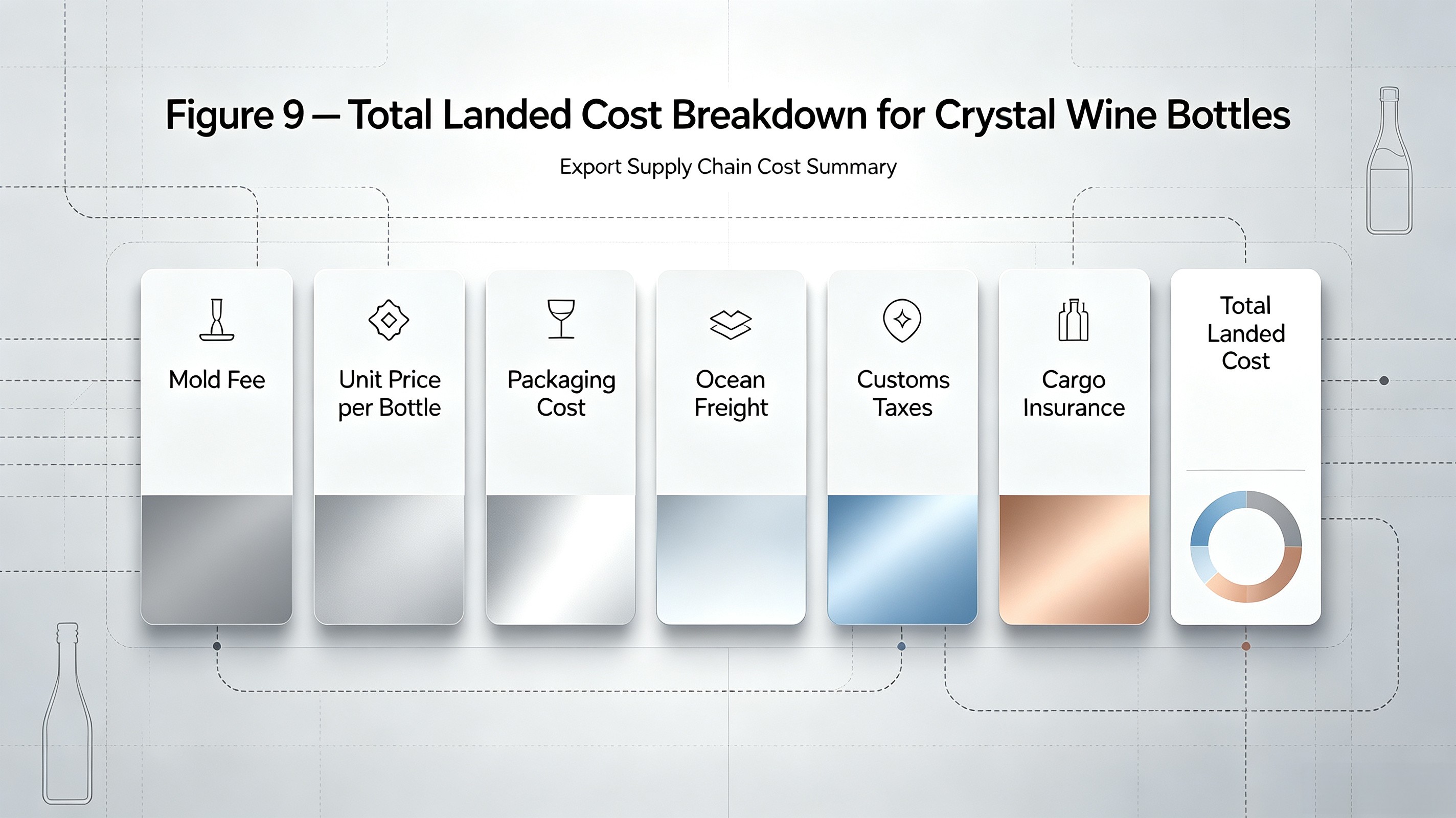
A lower FOB price does not always mean a lower landed cost. Container loading efficiency — how many bottles fit per 40HQ — can change your per-bottle logistics cost by 20–30%.
6. Conclusion & Call to Action
Sourcing the right wholesale liquor bottles is a strategic decision that affects your logistics, budget, brand image, and ultimately, your sales. From understanding how much a 750ml bottle of whiskey weighs to designing a completely custom mold, having the right manufacturing partner is essential.
Ready to elevate your distillery's packaging?
Request a Free Sample or Get a Custom Quote today. Our team of packaging experts is ready to help you create a bottle as exceptional as the spirit inside it.



 Hot News