
 EN


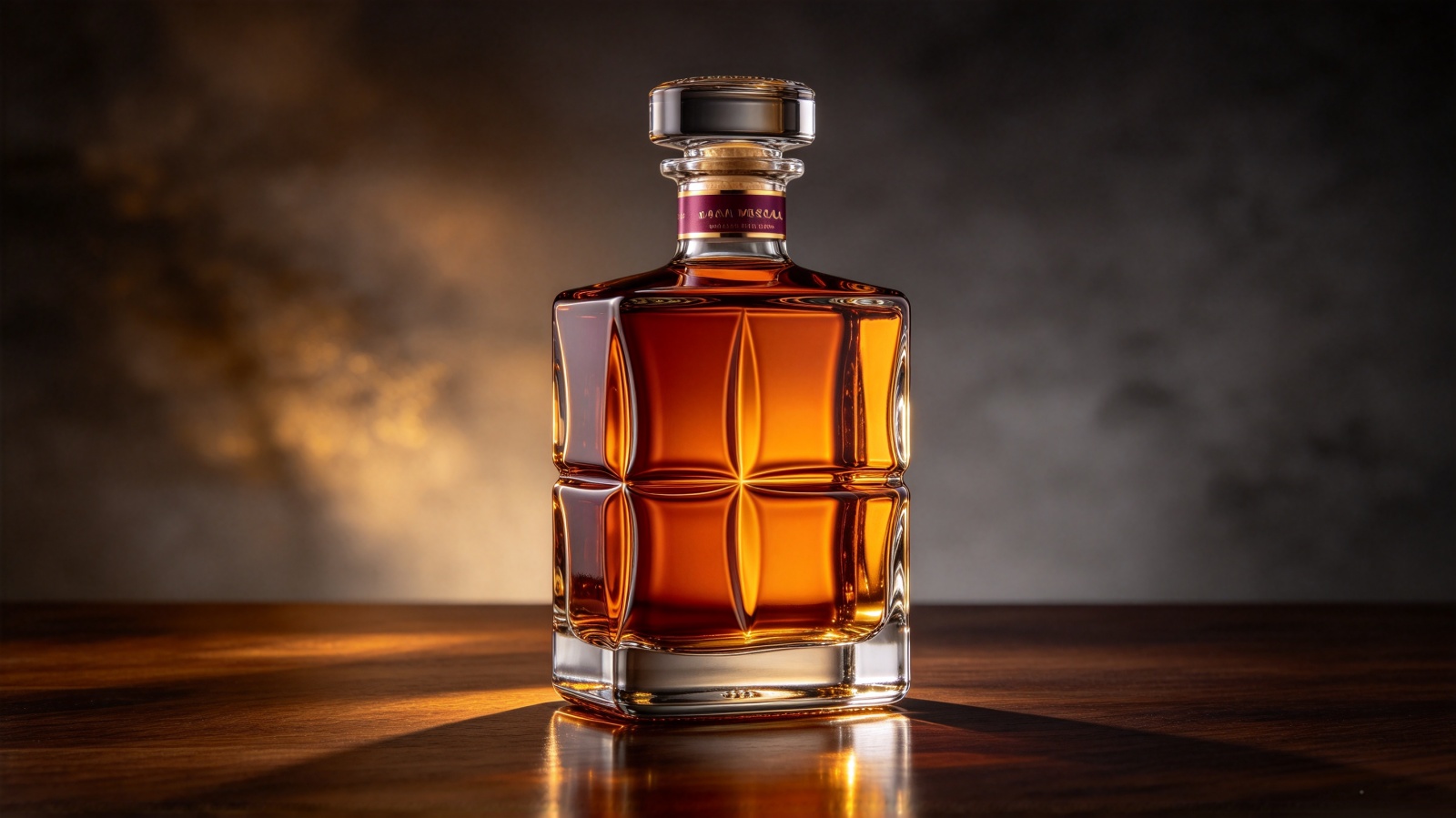
A Mexican craft spirits distillery discovered severe concave deformation on the first mass production run of a custom 700ml glass bottle. All four panels of the bottle body had caved inward during the cooling process, putting the brand's packaging upgrade and launch timeline at risk. Through root cause analysis, mold redesign, and annealing optimization, we resolved the defect within 25 days. The corrected production run achieved a 99.2% yield rate, and the client subsequently added the bottle to their long-term supply program.
1. Executive Summary
Body deformation is one of the hardest defects to correct in custom glass bottle production. Unlike bore tolerance or wall thickness deviation, it cannot be solved by simple parameter adjustments — it requires simultaneous intervention at both the mold structure and glass forming process levels.
Most factories will simply re-run production and hope for a better batch. This case shows what happens when you diagnose the root cause properly and address mold venting, glass distribution and annealing stress in one coordinated plan.
2. Client Background
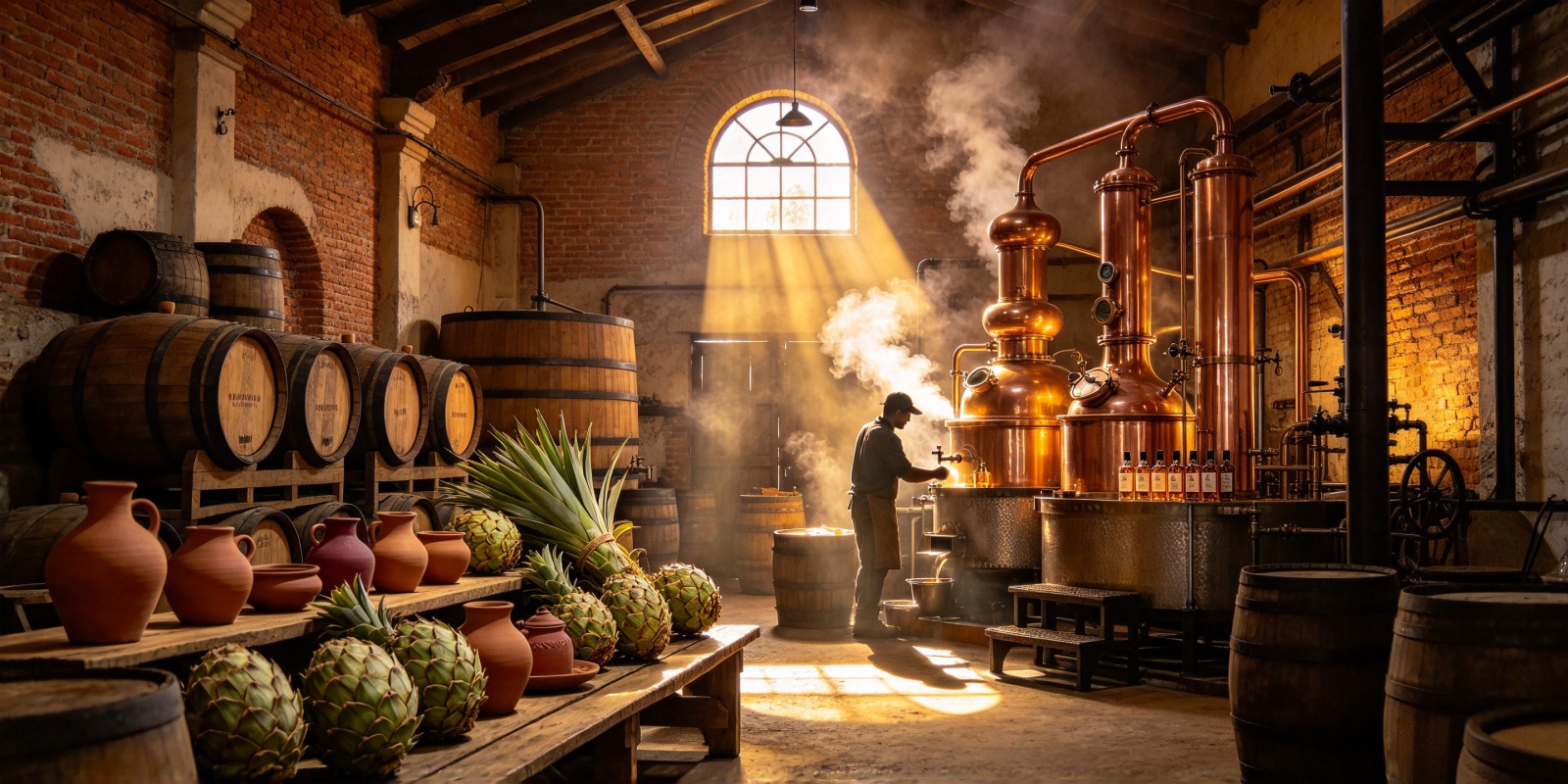
The client is a craft spirits distillery based in Guadalajara, Mexico, specializing in artisanal tequila and mezcal. Their products serve the premium domestic Mexican market and selected export channels in the United States. They commissioned us to develop a custom 700ml square glass bottle for a complete packaging upgrade of their flagship product. The bottle featured a four-panel structure, with each panel designed as a slightly concave curve to create a refined, modern shelf presence.
The challenge with this custom spirits bottle lay in its geometry: a four-panel structure demands exceptionally uniform cooling during glass forming. If any single panel cools at a different rate, the glass will contract inward and deform.
3. The Challenge
After the first mass production run, the client discovered a serious defect during spot inspection:
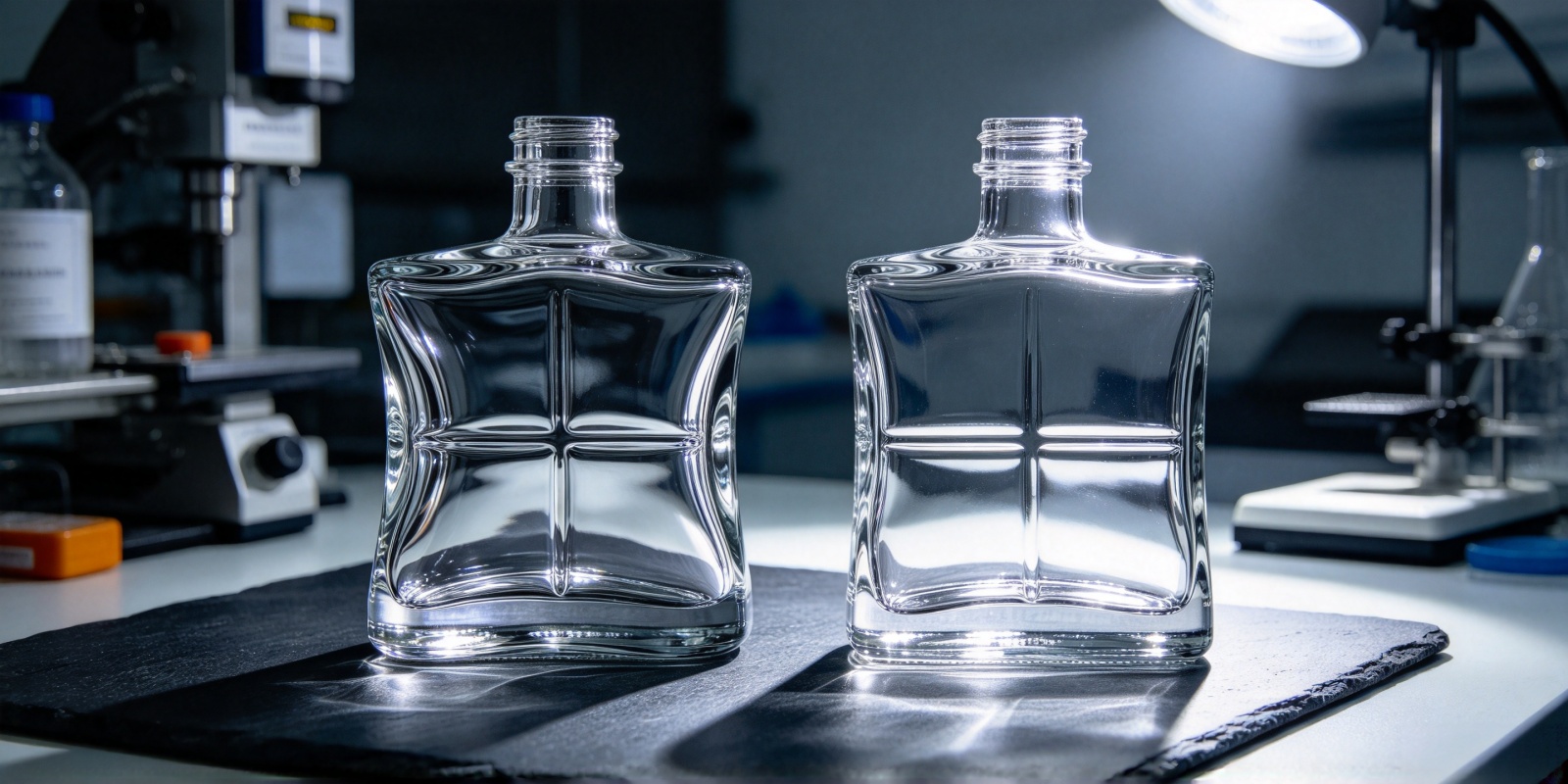
- All four panels exhibited concave deformation, with inward collapse measuring approximately 1.5–2mm. The defect was clearly visible under lighting.
- The deformation compromised both the visual flatness and structural integrity of the bottle. The client determined the batch was unsuitable for launch.
- Because the issue appeared in the very first production run, failure to resolve it quickly would delay the brand's packaging upgrade by at least one quarter.
The client's project lead stated plainly:
For any custom glass bottle project, body deformation is one of the most difficult defects to correct. Unlike bore tolerance or wall thickness deviation, it cannot be solved by simple parameter adjustments. It requires simultaneous intervention at both the mold structure and glass forming process levels.
4. The Solution
We did not rush into rework production. Instead, we conducted a complete root cause analysis. Our engineering team identified three critical factors within 5 business days:
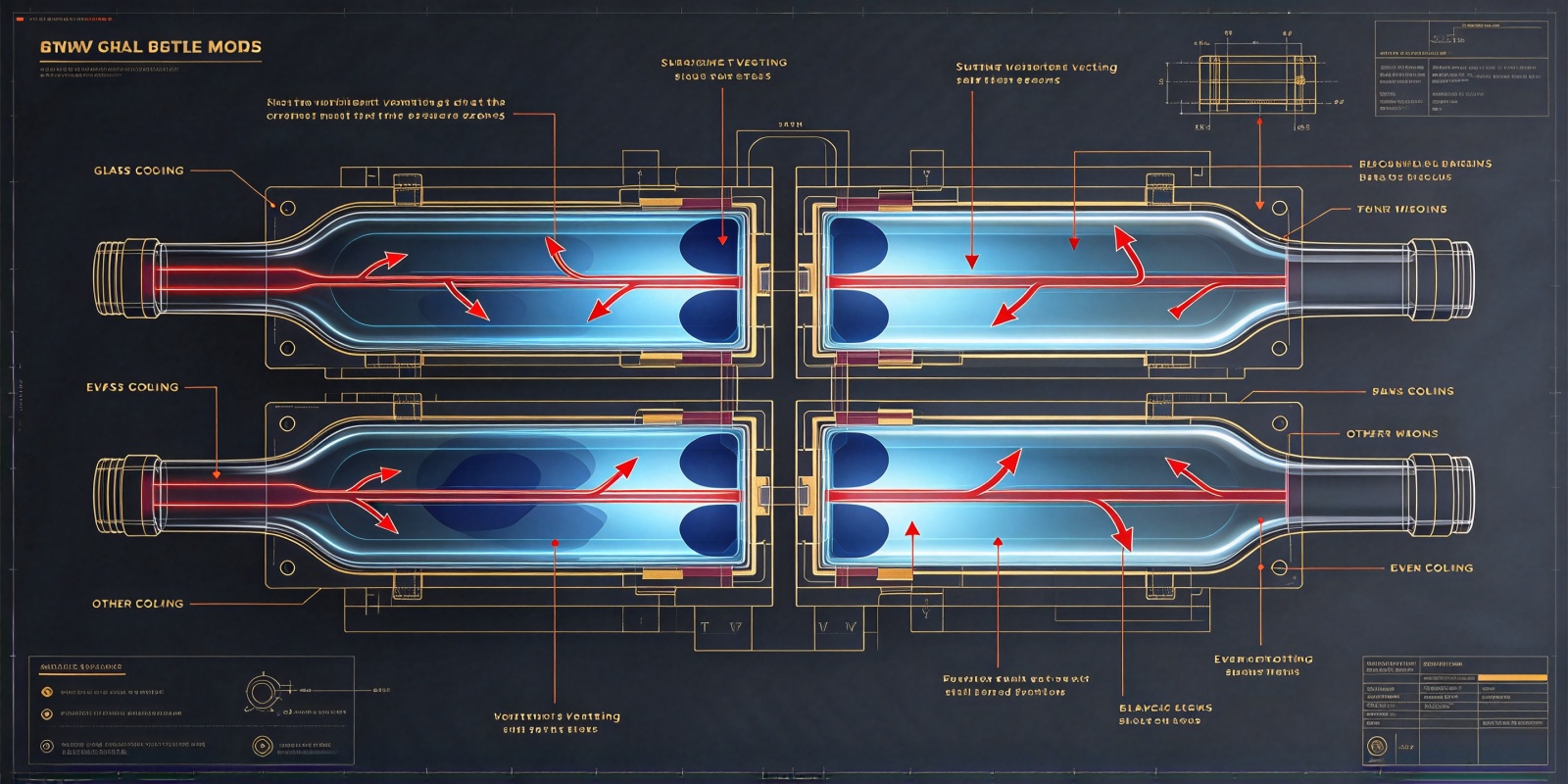
The four-panel mold structure caused uneven venting during cooling. Localized vacuum pressure formed in certain areas, pulling the still-setting glass inward. This was the direct cause of the concave deformation.
The sidewalls were too thin in certain areas, unable to withstand atmospheric pressure during cooling, which worsened the deformation. Glass gob weight also fluctuated, resulting in inconsistent wall thickness across the bottle body.
The annealing lehr's cooling rate was too fast. Internal stress in the glass was not fully released during annealing, further amplifying the deformation.
Mold Redesign
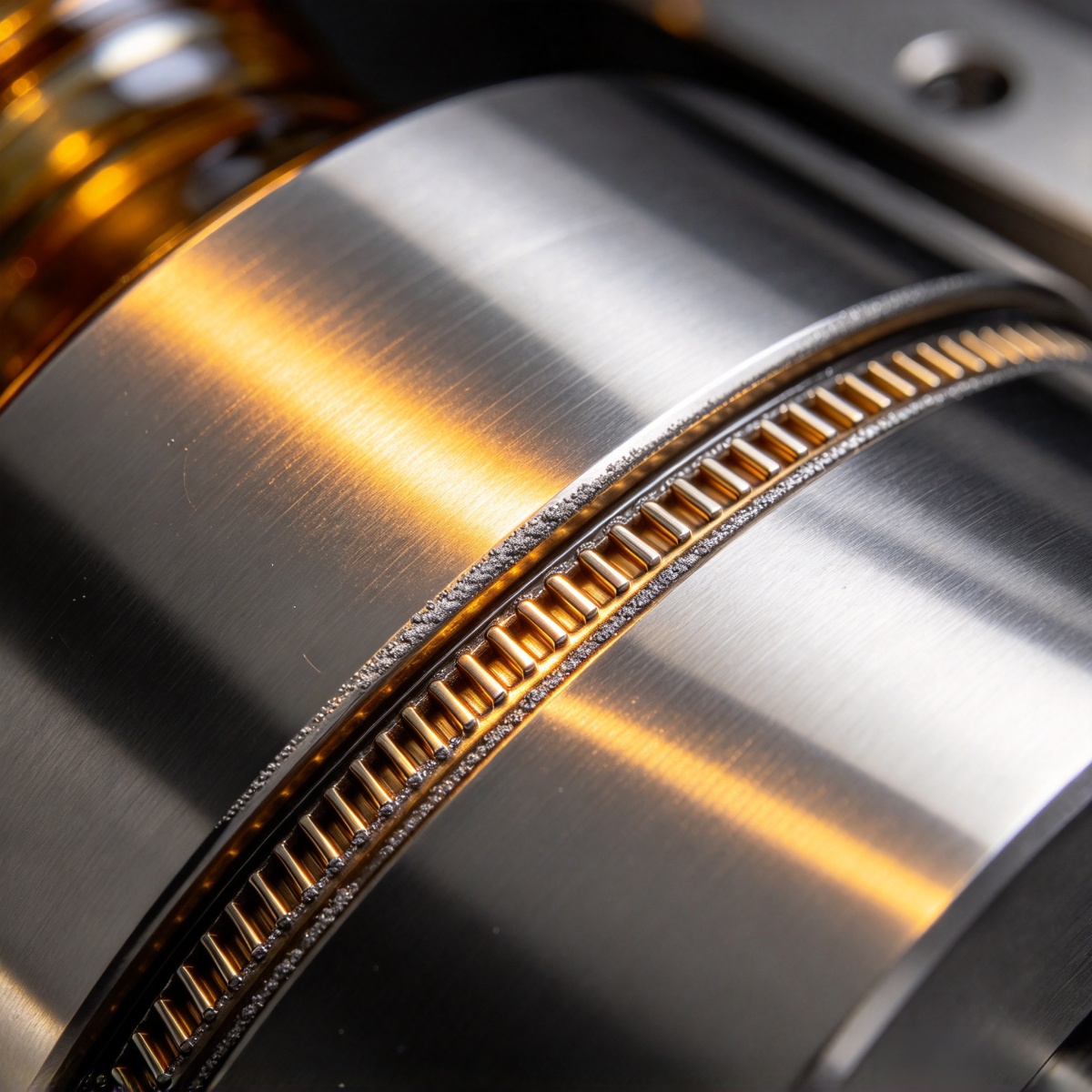
- Added micro-venting channels at the seams of the four panels to equalize air pressure across all panel areas during cooling.
- Optimized the cooling airflow distribution system to synchronize cooling rates across all four panels.
- Strategically increased wall thickness in critical sidewall areas to improve structural strength while preserving the bottle's elegant profile.
Glass Forming Process Optimization
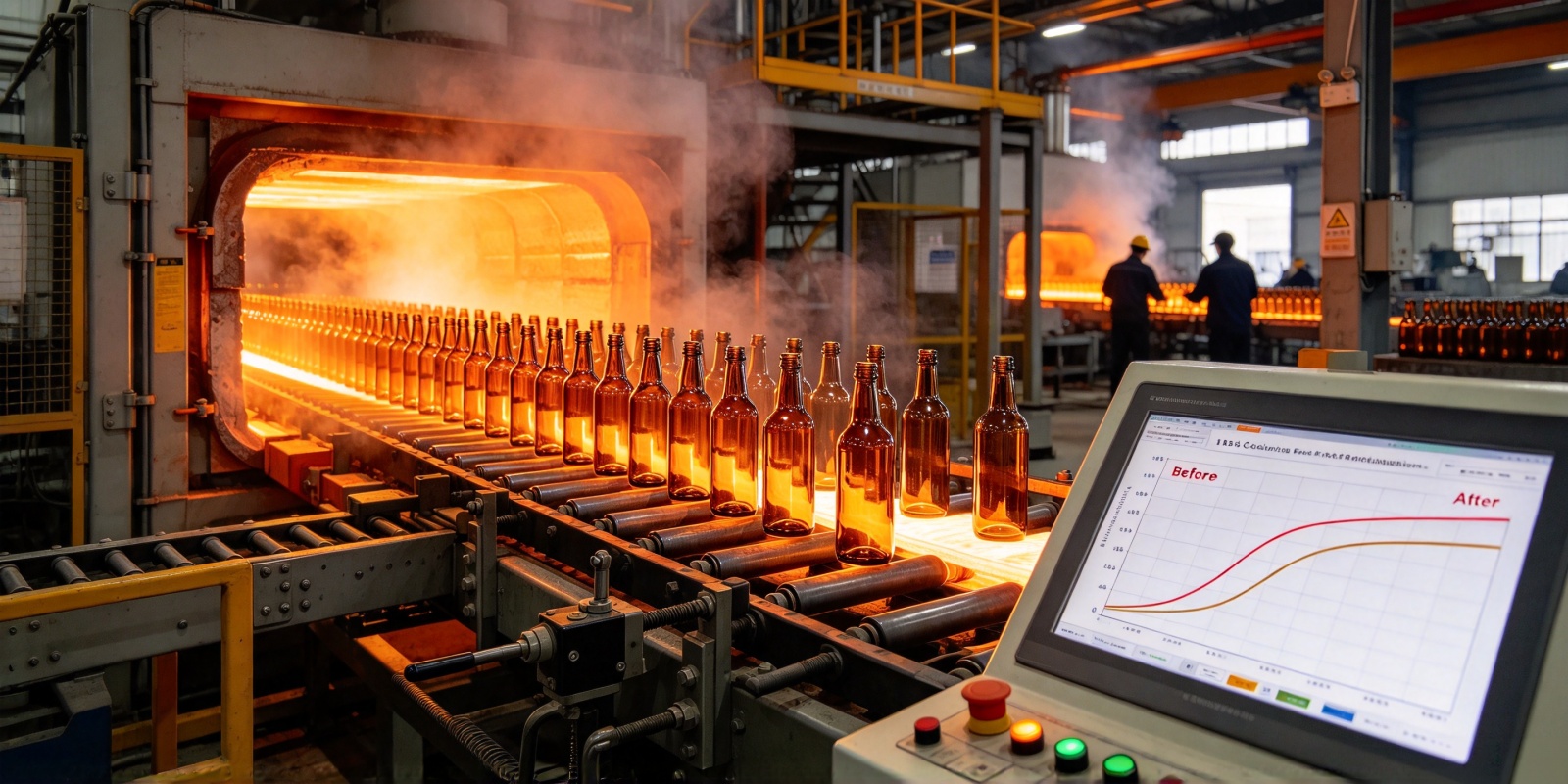
- Adjusted feeder parameters to ensure consistent glass gob weight, resulting in more uniform glass distribution within the mold.
- Reset the annealing lehr temperature curve, extending annealing time and reducing the cooling rate by approximately 15% to ensure complete stress release.
Verification Process
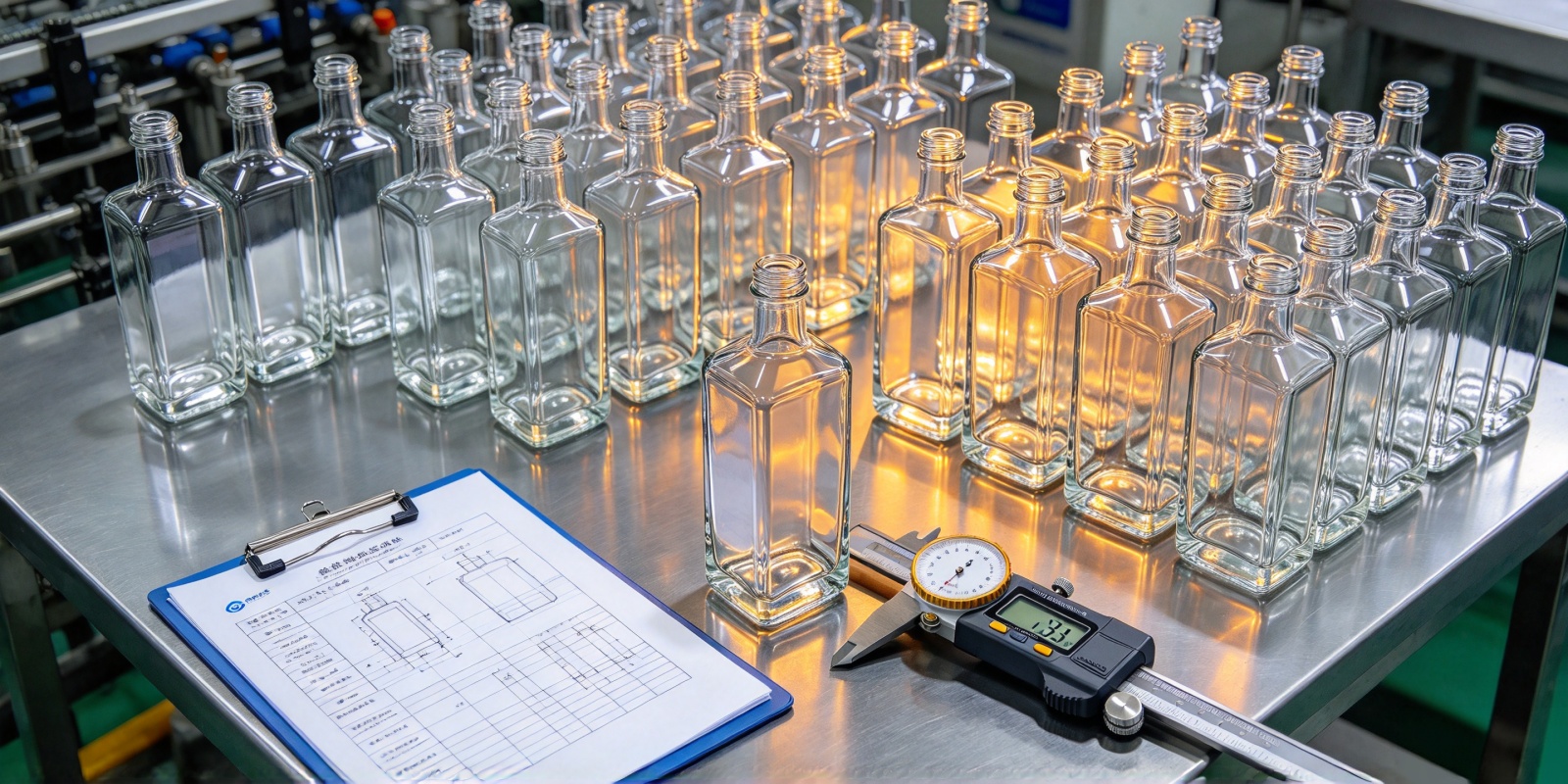
- After mold modifications, we produced a 300-unit trial batch for full dimensional inspection, deformation measurement, and annealing stress testing.
- The client confirmed the deformation was completely eliminated upon receiving the trial samples and approved mass production.
The entire corrective process — from root cause confirmation to batch delivery — took 25 days.
5. The Results
| Metric | Before | After |
|---|---|---|
| Panel flatness deviation | 1.5–2mm concave | ≤ 0.3mm ✓ |
| Yield rate | ~82% | 99.2% ✓ |
| Visual defect | Clearly visible under light | Invisible to naked eye ✓ |
| Client spot check | Failed | All passed ✓ |
| Timeline recovery | — | 25 days total ✓ |
- Deformation eliminated: Post-correction flatness deviation across the four panels was controlled within 0.3mm, invisible to the naked eye. All client spot checks passed.
- Yield improvement: The corrected batch achieved a 99.2% yield rate, a 17-percentage-point increase from the initial batch's approximately 82%.
- Timeline recovered: From defect discovery to corrected mass production delivery, the total elapsed time was 25 days. The client's brand upgrade timeline was not affected.
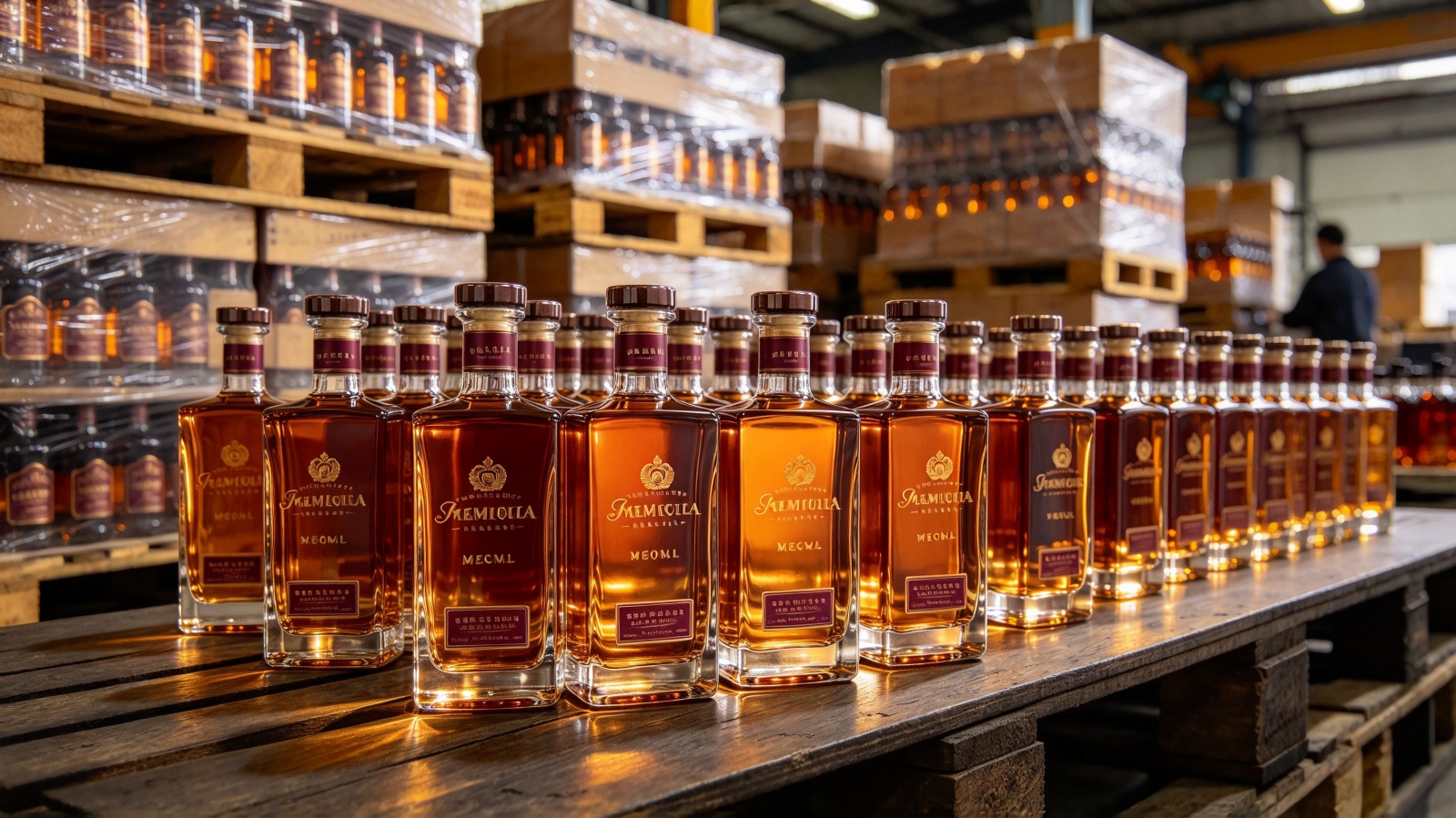
- Long-term partnership: The client added the bottle to their annual procurement plan and subsequently ordered two additional bottle sizes in the same series, reaching an annual volume of 80,000 units.
6. Client Testimonial
7. Call to Action
Is your custom glass bottle experiencing body deformation, uneven wall thickness, or annealing stress issues? Send us your bottle drawings and defect sample photos. Our engineering team will provide a root cause analysis and corrective plan within 5 business days.
Whether you need a custom spirits bottle, a private label liquor bottle, or a custom glass bottle with complex geometry, we handle mold design, glass forming, and annealing optimization in-house. One partner, one timeline, one point of accountability.
Send Us Your Bottle Drawings and Defect Samples
Our engineering team will review your bottle geometry and defect patterns, then come back with a root cause analysis and corrective plan — no obligation, no generic sales pitch.