EN

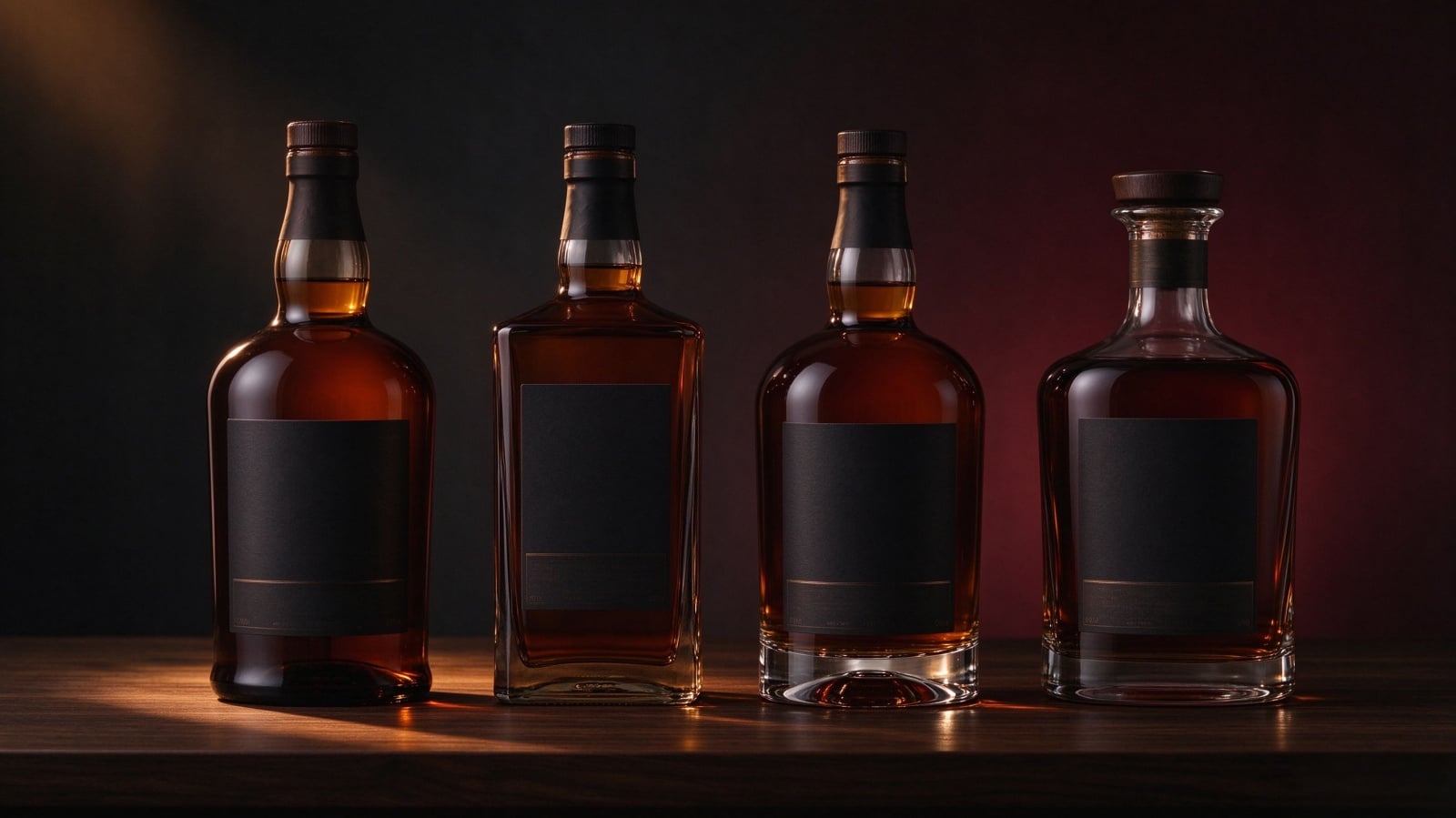
For whisky bottle buyers, the sourcing question is not which shape looks best. It is which shape delivers the intended shelf signal at a manufacturing cost, filling-line behaviour and freight profile the project can actually sustain. This guide compares the four dominant whisky bottle formats with factory-level cost and MOQ data.
1. Round Bottles: The Production Baseline
Round-shoulder whisky bottles—the classic flask silhouette—are the most neutral and operationally efficient choice. The continuous curve distributes wall stress evenly, the bottle self-centres on filling-line guides, and standard cartons, pallets and neck finishes keep supply-chain costs low. The round-shoulder flask is the most widely recognized whisky silhouette globally and works across value and mid-range price bands.
Round bodies run on high-speed IS machines at the lowest forming cost. Faceted, embossed or asymmetric shapes slow forming by 15–30% and raise the price accordingly; round is the reference point against which that premium is measured. Custom-mould MOQ for a standard round whisky bottle typically runs 5,000–10,000 pieces.
Round is not a compromise on brand. It is a decision to put packaging budget into the liquid or the label rather than into tooling complexity. For high-volume whisky programmes where filling-line speed and carton standardisation matter, round remains the lowest-risk baseline.
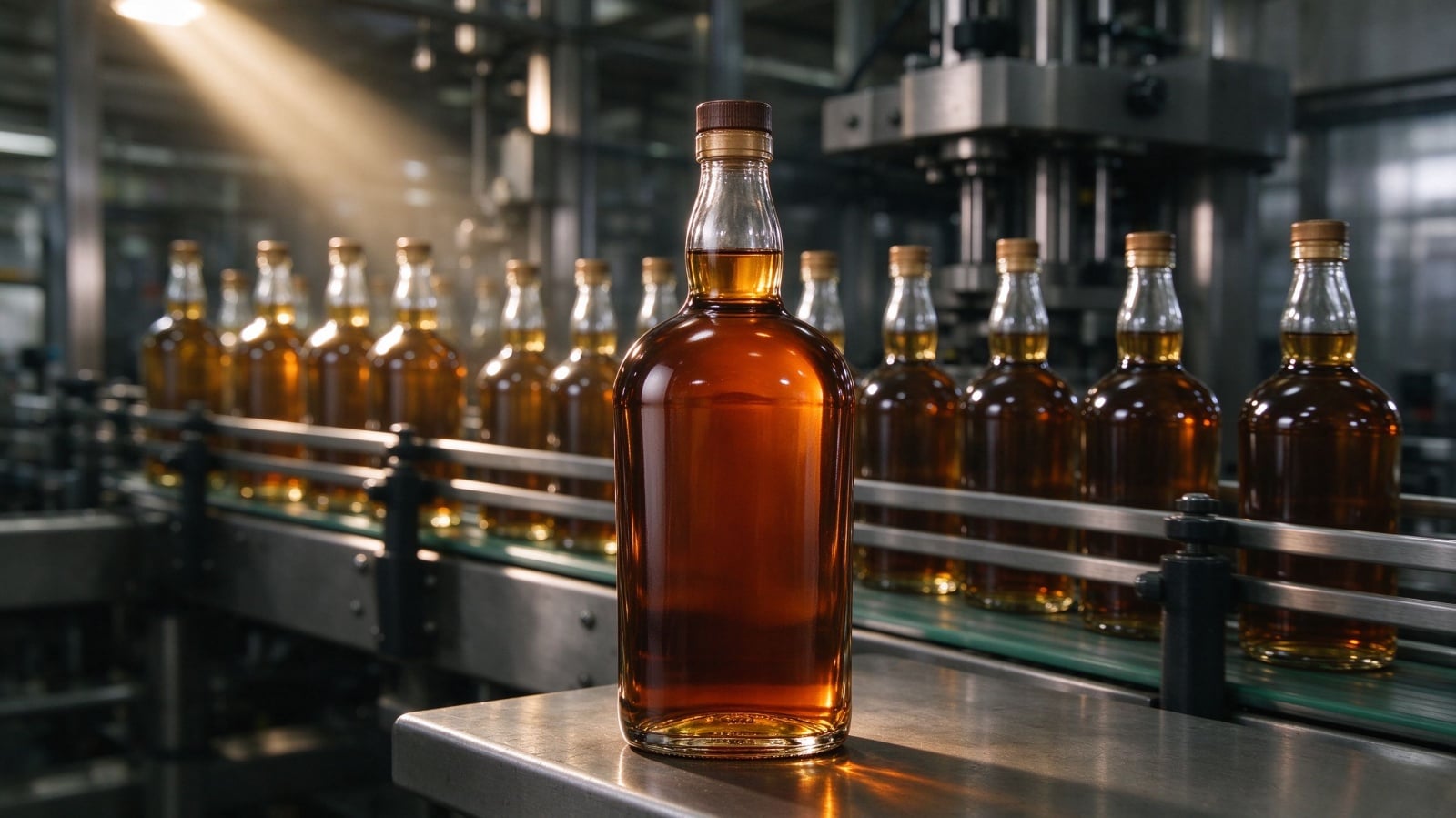
2. Square Bottles: Shelf Differentiation at a Measurable Premium
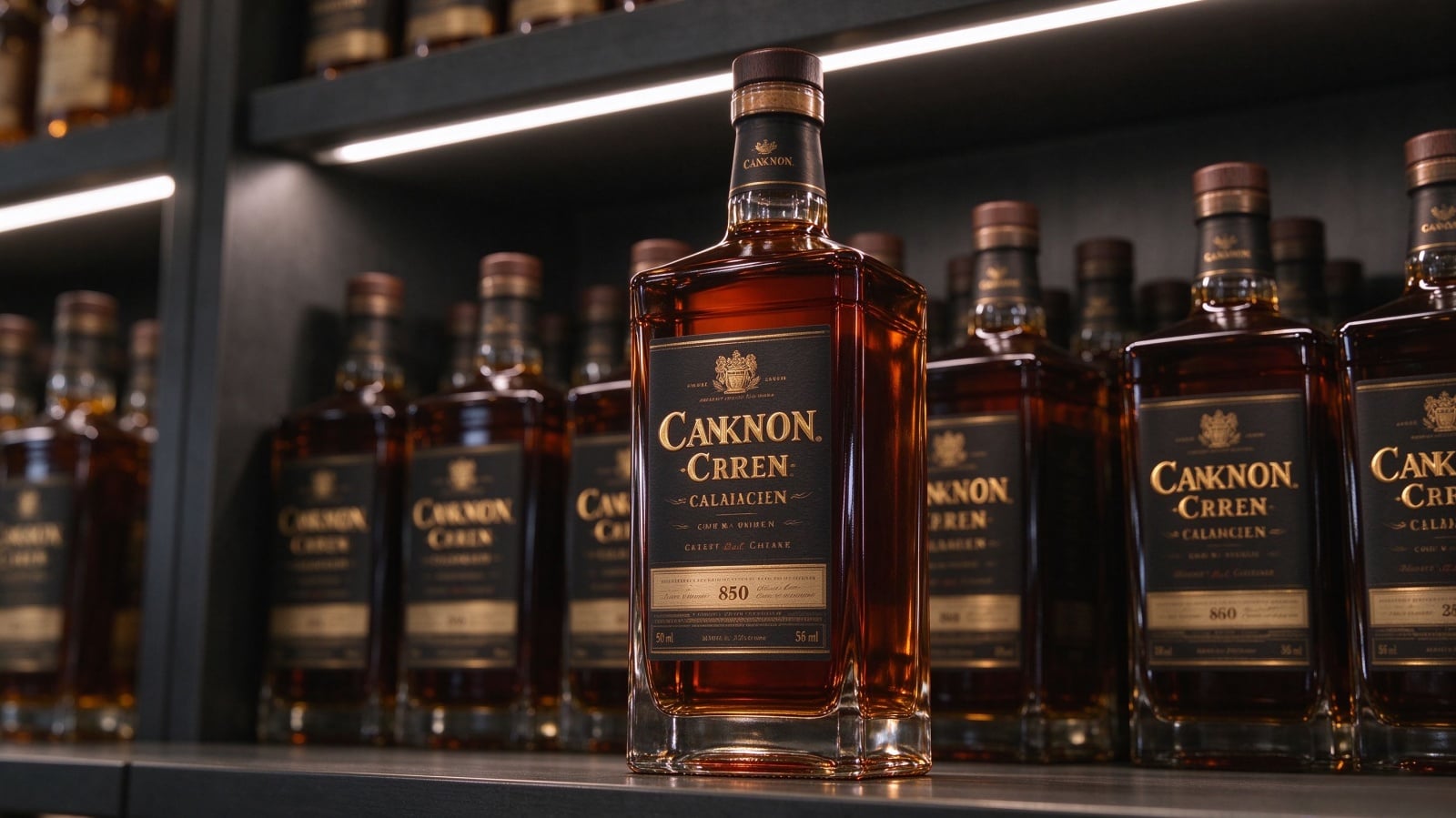
Square and slab shapes exist to create shelf contrast. Four flat faces provide up to four label or print surfaces, embossing and foiling read more sharply on a flat panel, and the 90-degree edges catch light in a way a round bottle cannot. The packaging density is also better: square bottles pack roughly 15–20% more units per carton and free up 25–30% of shelf space.
The cost is real and should be quoted, not assumed. Square bottles typically run 10–15% more expensive than round equivalents, and corner walls need to be 15–20% thicker because corners concentrate impact stress—with a minimum around 1.2 mm on larger bottles. The forming route changes as well: square narrow-neck spirits bottles generally require press-and-blow rather than the blow-and-blow process used for round containers. That means a different mould setup, a slower cycle, costlier tooling and fewer cavities per mould, all of which push per-unit cost upward.
Square bottles improve pallet and carton density, but a chipped corner in export transit is a common failure mode. A 750 ml bourbon switched from round to square for shelf presence may sell better on the shelf—and still arrive in Rotterdam with two corners chipped, requiring a tougher export carton and a more conservative packing specification. Square is a positioning investment, not a cost-reduction move.
3. Heavy Base: Buying Perceived Age and Physical Weight
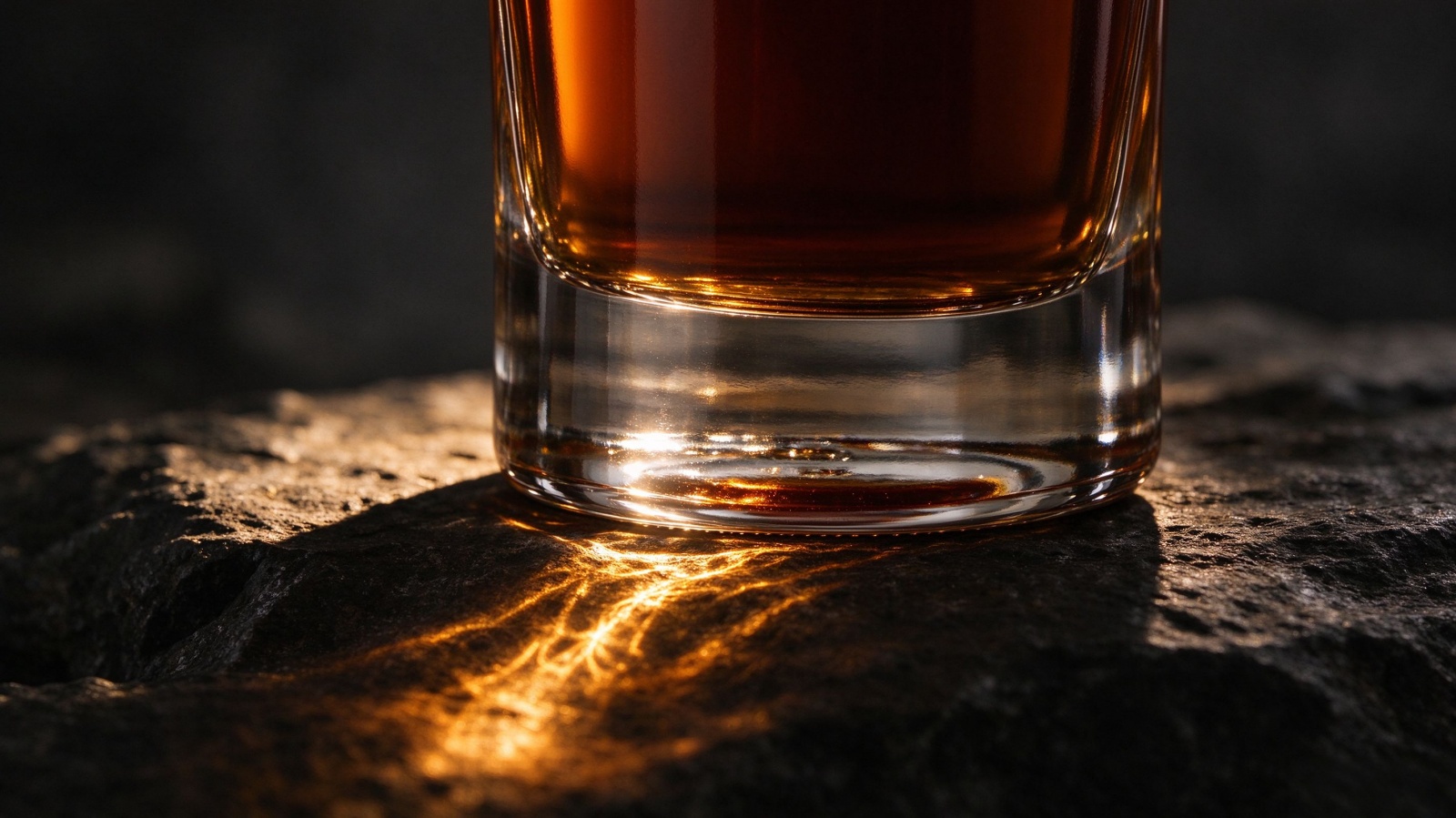
A heavy base—sometimes described as a thick base or weighted bottom—is the most direct glass-based signal of premium whisky positioning. It changes the hand feel, lowers the visual centre of gravity and creates the perception of depth beneath the liquid.
The weight and cost relationship is precise. A standard 750 ml whisky bottle typically weighs 480–550g; premium expressions with thick bases commonly run 650–850g, and each additional 100g adds roughly $0.05–0.08 to the FOB price plus freight. At the super-premium end, 700–750 ml heavy-base bottles can reach 750g–1,000g, with base geometry and stability specification becoming variables rather than cosmetic choices.
Freight is where heavy base becomes a cross-functional decision. A 1.75 L decanter-style bottle can weigh over 2kg empty, and shipping cost scales with actual or volumetric weight, whichever is higher. A 620–650g heavy-base 700 ml bottle is a common premium specification; a 750g+ bottle sits in the upper-premium tier and should be priced with the pallet-weight penalty included.
The question is not whether the base feels premium—it does. It is whether the premium signal is concentrated where the target channel will notice it, and whether the freight penalty is priced into the landed cost. A heavy base in a value-export SKU costs freight and compliance fees while signalling little that the buyer is paying for.
4. Decanter: The Super-Premium Format with a Different MOQ Logic
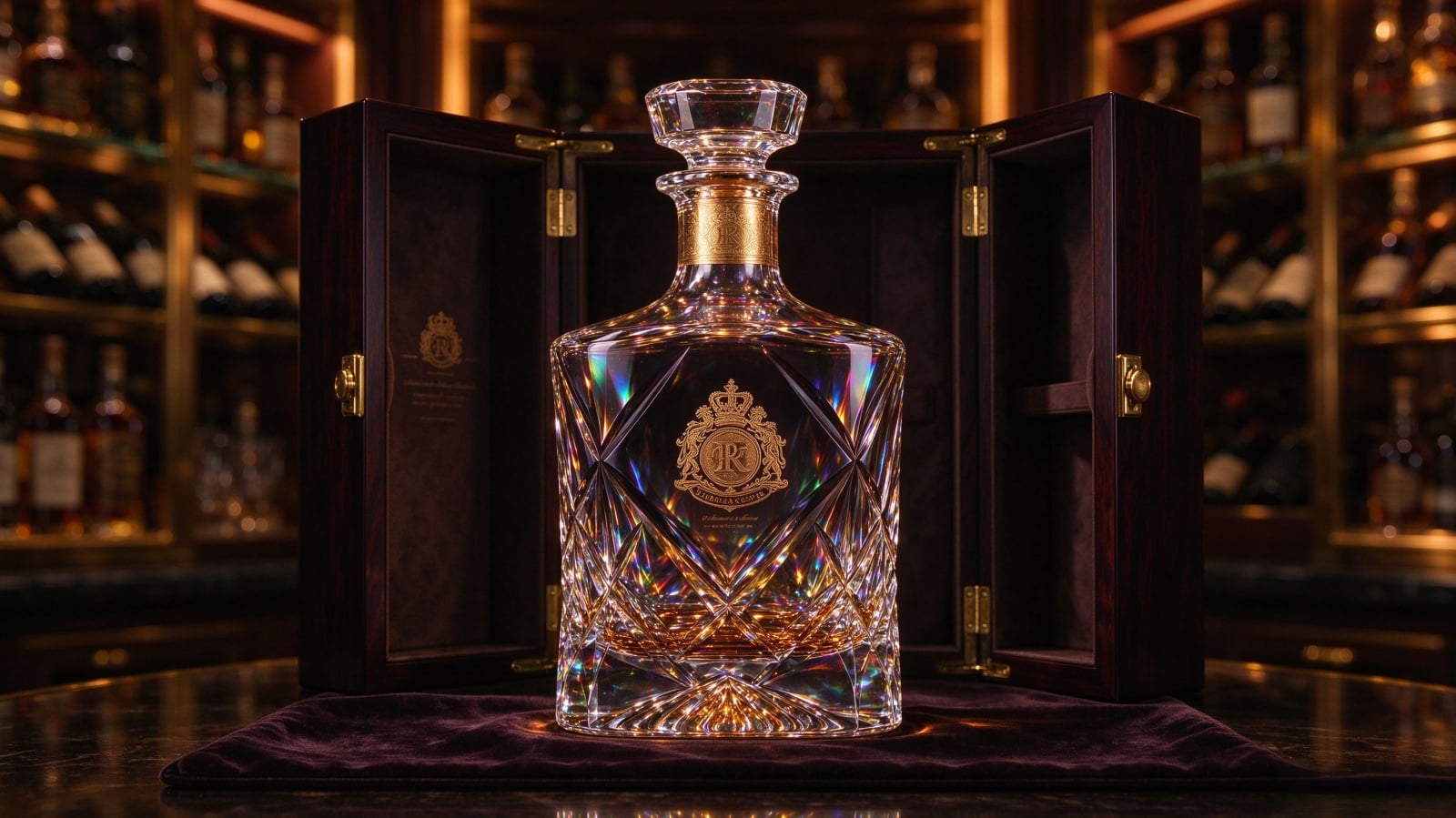
Decanter-style whisky bottles—wider body, shorter neck, heavy base—are the strongest visual statement in the category. They communicate weight, substance and age, and they provide a broad surface for deep facets, large-area screen printing or embossing.
The economics invert the usual MOQ relationship. Custom decanter moulds typically run 3,000–8,000 pieces, lower than the 5,000–10,000-piece range for standard round bottles, because the higher unit cost and narrower use case limit order volume. The lower MOQ does not mean lower total project cost. Glass weight per unit is higher, decoration area is larger, and carton strength and pallet configuration must be engineered around a wider, heavier bottle.
Decanter formats belong to single-barrel releases, limited editions and super-premium gift expressions. They should be planned as brand-building or margin-accretive projects, not as the core volume SKU.
5. Shape Selection Matrix
The decision sequence should be: channel signal first, filling-line capability second, freight weight third, tooling amortisation last. A square bottle that chips in export transit is not a shelf win. A heavy base that reaches the consumer in a value channel is not a premium signal—it is a freight line item.
| Shape | Best B2B Use | Cost Profile vs Round | MOQ Reference | Primary Risk |
|---|---|---|---|---|
| Round shoulder / flask | High-volume core whisky, value to mid-tier | Baseline | 5,000–10,000 pcs (custom) | Low differentiation without decoration |
| Square / slab | Shelf-led mid-premium, bar-well presentation, design-forward brands | +10–15% unit cost; +15–20% corner wall | Higher tooling cost; confirm cavity count | Corner chipping; thicker export carton required |
| Heavy base | Premium and super-premium retail, gifting | ~+$0.05–0.08 FOB per 100g above standard weight | Standard shape MOQ applies | Freight and pallet-weight penalty |
| Decanter | Super-premium, limited edition, single-barrel | Highest unit cost and freight weight | 3,000–8,000 pcs (custom) | Lower MOQ but highest total landed cost risk |
6. Call to Action
Selecting a whisky bottle shape for your next release? Send us your target shelf positioning, volume plan and decoration requirements. Our engineering team will provide a factory-level cost comparison, MOQ analysis and filling-line compatibility check within 5 business days — no obligation, no vague promises.
Whether you need a high-volume round flask, a shelf-differentiating square slab, a premium heavy base, or a super-premium decanter, we handle mould design, glass forming, decoration and inspection in-house. One partner, one timeline, one point of accountability.
Send Us Your Target Shelf Positioning and Volume Plan
Share your brand positioning, target channel and volume forecast. We will come back with a factory-level cost comparison and MOQ analysis — no obligation, no generic sales pitch.



 Hot News